John Finlay Group Of Companies

Dense Medium Separation

Dense medium separation (DMS) is the workhorse of most Indian coal washeries a suspension of finely ground magnetite in water, held at a precise density, so coal floats and higher-density rock sinks. Get the medium density and the Ep value right, and yield and product quality follow.

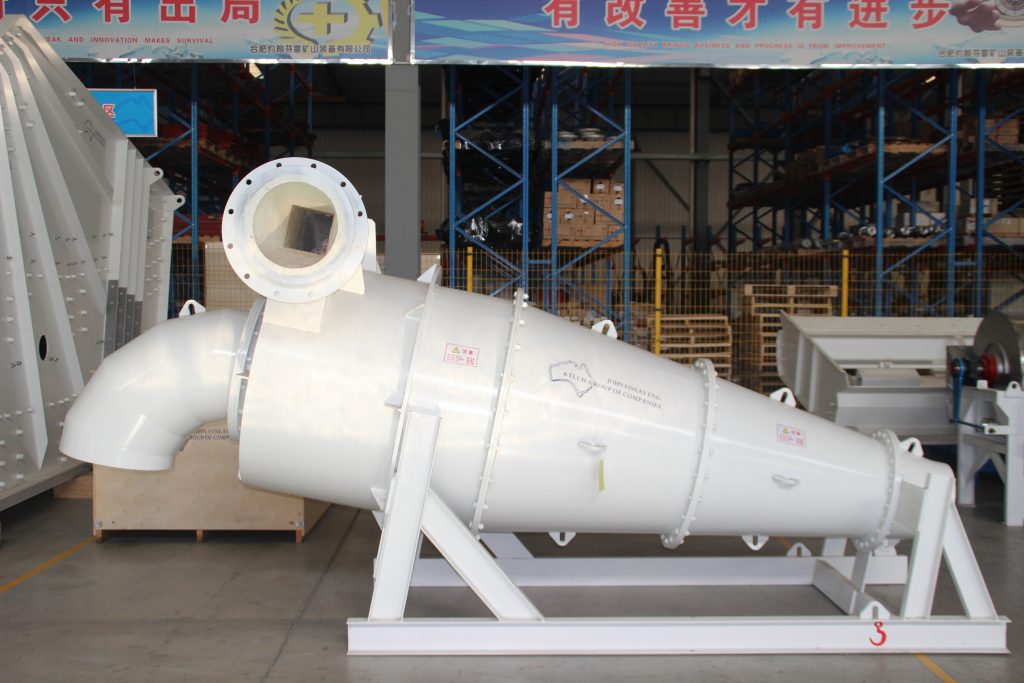
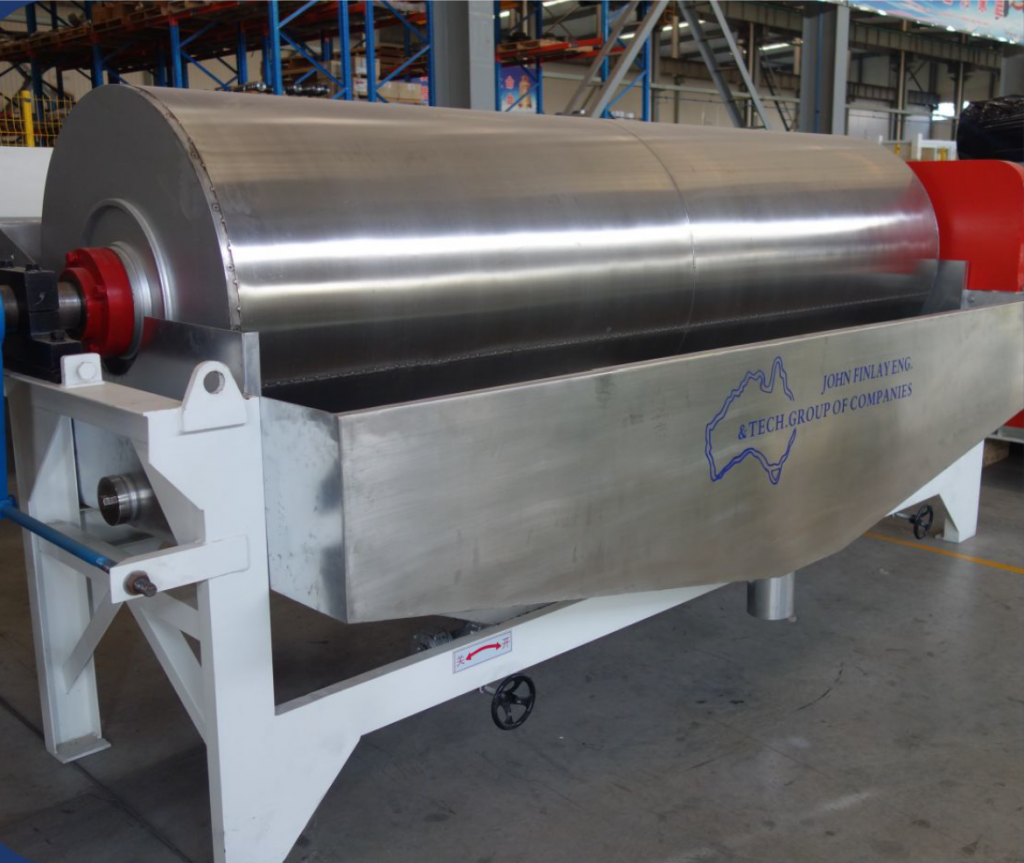
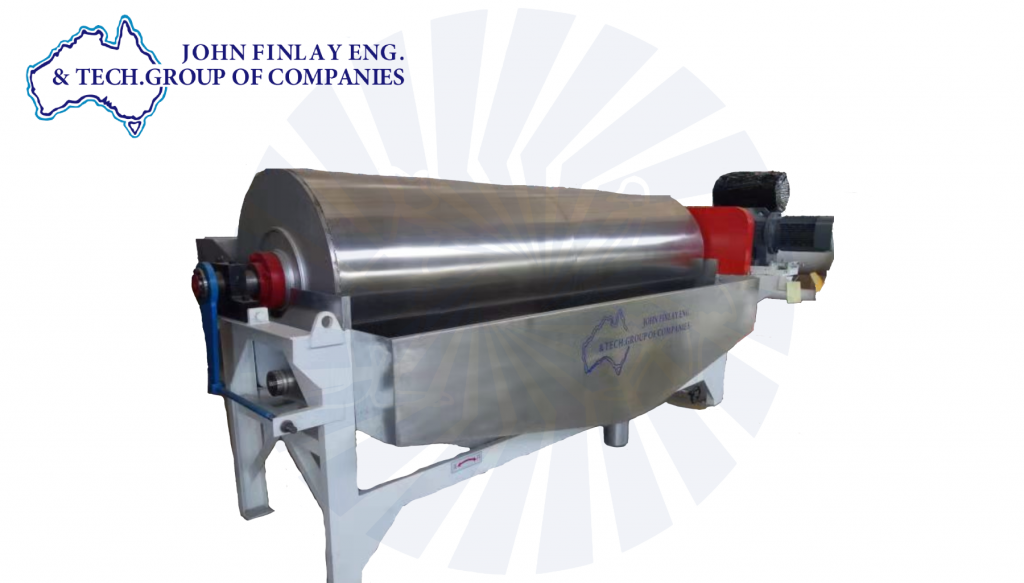
John Finlay’s three-product dense medium cyclones have a wear-resistant corundum lining that gives them a long service life, and they can be used in both non-pressure and pressure-feed configurations depending on coal washability. Magnetite recovery, the number that quietly determines your operating cost, runs through purpose-built magnetic separators, achieving over 99.9% recovery efficiency with a stainless steel drum designed for continuous wear resistance.

This area is also where John Finlay’s consultancy work goes deepest: root-cause diagnosis on underperforming HMC circuits, tracing a problem back to feed size distribution, SG creep, cyclone wear, or a blocked apex, rather than just logging the deviation. This category covers DMS theory, cyclone and bath design, and the operational discipline that keeps a circuit performing at its designed Ep value over years, not just on commissioning day.

Explore further: Dense Media Cyclone · Magnetic Separators · Download the Equipment Brochure

Heavy media cyclone

Cut Point Control in Heavy Media Cyclone Circuits: SG Drift and Correction

Cut Point Control in Heavy Media Cyclone Circuits: SG Drift and Correction Our Dense Media Cyclone product page states a separation efficiency of 95% or better and an Ep of 0.03 or lower. Those numbers are real and achievable, but they describe what a correctly operating cyclone delivers, not a guarantee that holds regardless of how the circuit around it is run. Cut point and Ep both drift in service, and understanding what erodes them is what actually keeps that spec true on your plant, not just on the datasheet. What Ep and Cut Point Actually Measure Cut point d50 is the density at which a particle has an equal chance of reporting to either the clean coal or the reject stream. It’s the number your washability curve is built around, and it determines yield and ash at a given density target. Ep, the probable error, measures how sharp that separation actually is. Take the density at which 75% of particles report to sink and the density at which 25% report to sink, and Ep is half the difference between them. A lower Ep means less material is being misplaced near the cut point of coal that should report to product staying in reject, or higher-ash reject slipping into product. Two circuits can hold the same d50 and produce very different yield and ash outcomes if their Ep values differ. Both numbers matter together. A cyclone holding its design cut point with a widening Ep is still losing yield and ash performance, even though the density target on the gauge hasn’t moved. This is also why Ep alone, without cut point context, can be misleading when comparing circuits. A cyclone running a low cut point with a moderate Ep can still misplace more total tonnage than one running a higher cut point with a genuinely sharp Ep, simply because more of the feed sits near the separating density in the first case. Reading the two numbers together against your actual washability curve tells you whether a given Ep is actually good enough for your coal. What Erodes These Figures in Service Medium SG drift is usually the first point to consider separately against your actual washability curve. Density drift shifts the achieved cut point directly, even when the cyclone itself is mechanically sound. If your medium density isn’t holding at the target you designed the cut point around, no amount of cyclone geometry corrects for it. Medium rheology is the second factor, and it’s driven largely by magnetite granulometry and solids concentration rather than anything happening inside the cyclone body. Poor medium viscosity widens Ep directly because particles don’t respond cleanly to the density gradient the cyclone is trying to create; the medium itself is behaving inconsistently before separation even happens. We go into the specification numbers that hold this steady in our post on magnetite quality and granulometry. Cyclone wear changes the internal geometry the design assumes. Liner wear, particularly at the spigot, gradually alters the flow pattern inside the cone. A worn spigot that’s grown beyond its design diameter changes the underflow density the cyclone can hold, which widens Ep well before the wear becomes visually obvious from outside the unit. Feed pressure outside the design range works against separation from a different angle. Heavy media cyclones are sized for a specific feed head run below it and centrifugal force drops, widening EP run. meaningfully above it, and turbulence increases inside the cone, which also degrades separation sharpness rather than improving it. When spigot capacity is exceeded, roping becomes visible, where the underflow discharge loses its normal spray pattern and instead ropes out in a dense, coherent stream, which is the clearest sign that something upstream has pushed more solids through the spigot than it can properly discharge. Once roping starts, Ep degrades quickly, and it’s usually a downstream symptom of one of the other four causes rather than an independent fault. The vortex finder-to-spigot diameter ratio sits behind several of these symptoms at once. That ratio is what the cyclone’s design assumes when balancing overflow and underflow splits, and it’s fixed by the geometry John Finlay specifies for a given duty. Spigot wear changes the ratio directly. Feed pressure outside the range changes the effective split even with the physical geometry unchanged. Medium rheology issues change how the solids actually distribute across that split regardless of what the ratio nominally is. None of these show up as a single obvious fault; they show up as the ratio no longer doing the job it was sized for, and Ep is usually the first number to reflect that. Five factors that erode separation efficiency in service Diagnosing Which Factor Is Yours Check the medium SG trend first. It’s the cheapest and fastest check, and if density has been drifting, that’s very likely where cut point movement is coming from before anything else needs investigating. Check magnetite specification against your certificate of analysis next, particularly if SG is holding steady but Ep itself has been widening independent of cut point. A circuit can hold its density target while running a medium that’s fundamentally worse at supporting a sharp separation. Inspect spigot diameter directly rather than relying on visual wear alone. A spigot worn a few millimeters beyond spec can shift underflow density meaningfully without looking obviously different from a normal one. Confirm feed pressure against the cyclone’s design specification, since pump wear and circuit changes elsewhere can quietly shift operating pressure away from where the cyclone was sized to run. Watch the underflow discharge for roping during normal operation. If it’s present, treat it as an urgent signal rather than a cosmetic issue; it means the circuit upstream is already overloading the spigot’s capacity. Work through these in order rather than jumping to the one that seems most likely. Because several of these factors interact, worn spigot geometry compounds with feed pressure drift, and off-spec medium compounds with both a plant that assumes it knows the cause and jumps

Cut Point Control in Heavy Media Cyclone Circuits: SG Drift and Correction Read More »

Coal Washery Magnetic Recovery Equipment Magnetic Separator for Coal Washery

Magnetite Consumption in Dense Medium Circuits: Benchmarks and How to Diagnose Yours

Magnetite Consumption in Dense Medium Circuits: Benchmarks and How to Diagnose Yours Every dense medium circuit consumes magnetite. The number that actually affects your operating cost isn’t whether it consumes magnetite; it’s how much it should consume and whether your circuit’s real figure is close to that or has quietly drifted away from it. For a correctly specified low-intensity wet drum separator, that benchmark sits close to 800 grams of magnetite per tonne of ROM coal washed. That figure comes from our own 2024 technical work on magnetite recovery in Indian coal duty, and it holds for circuits where the drum, the launders and the screens are all doing what they’re designed to do. It isn’t a theoretical minimum reserved for a perfect plant on a good day. Correctly running circuits sit on it. Most plants don’t. Ask five washery managers what their circuit consumes and you’ll usually get five different numbers, most of them well above 800 g/t, and almost none of them broken down by cause. That’s the real problem. Not that consumption is so high that nobody can say why. Magnetite is also one of the few genuinely controllable variable costs in a dense medium circuit. Coal quality is what it is. Throughput is set by the plant’s design and the market. Magnetite consumption, on the other hand, is almost entirely a function of how well the circuit is running, which means it’s one of the fastest places to find real savings without touching capacity or product spec. It matters more in Indian coal duty than the number alone suggests. Higher ash content and larger near-gravity fractions put more physical load through the medium circuit per tonne washed than many imported coals do, which makes the discipline around magnetite recovery worth more here, not less. A circuit that’s leaking magnetite on an easy coal is expensive. The same leak on a difficult Indian coal is worse because the circuit is already working harder to hold separation efficiency. Where The Number Actually Goes The arithmetic is straightforward once you have your number. Take the difference between what your circuit actually consumes and the 800 g/t benchmark, multiply it by tonnes of ROM washed, and multiply it by your delivered magnetite price. That’s what the gap is costing, every month, independent of anything else that might be off in the circuit. It’s rarely one cause on its own. Most circuits we’ve looked at closely turn out to have two or three loss points running at the same time, each one modest by itself, together adding up to a consumption figure that looks unremarkable until it’s actually benchmarked against what the circuit is capable of. A magnetic separator recovering to its rated efficiency is the foundation the rest of this diagnosis depends on. Every other loss point on this list is easier to isolate once you know the drum itself isn’t the source. If your separator hasn’t been checked against rated recovery performance recently, that’s where you should begin. None of this requires shutting the circuit down to find out. A shift-length mass balance, a tailings sample, and an honest look at your density trend will tell you within a day whether you’re close to 800 g/t or carrying a gap worth chasing and roughly which of the five loss points above is the likely cause. Diagnosing Your Own Number Before making any changes to the circuit, please establish your current position. Run a magnetite mass balance over a full shift, comparing the mass of magnetite added to the tonnes of ROM washed in that same shift, rather than relying on monthly purchase records averaged against monthly throughput. Monthly figures smooth out exactly the upsets you’re trying to find. Check the magnetic separator tailings directly. A bucket sample and a hand magnet will tell you, qualitatively and quickly, whether magnetite is riding out with the reject in a way that shouldn’t be happening. If it is, the drum is your starting point for investigation, not the makeup rate. Sample what’s leaving on the product and discard screens, not only what’s leaving in the tailings stream. Carryover on clean coal is invisible unless someone specifically checks for it, and it’s one of the more common blind spots on sites that only monitor the obvious loss points. Track medium density against a setpoint across a full shift rather than relying on a single spot check. A circuit that chronically runs under density and receives fresh magnetite additions has a dilution problem disguised as a magnetite consumption problem. Separate consumption from loss. Some magnetite leaves the circuit because it’s genuinely degraded past the point of recovery for its consumption, and better magnetite quality addresses it. Some leave because a piece of equipment isn’t performing to specification; that’s a loss, and no amount of premium magnetite fixes it. Sites that treat both the same way keep buying their way around mechanical problems. What Closing The Gap Is Worth Before making any changes to the circuit, please establish your current position. Run a magnetite mass balance over a full shift, comparing the mass of magnetite added to the tonnes of ROM washed in that same shift, rather than relying on monthly purchase records averaged against monthly throughput. Monthly figures smooth out exactly the upsets you’re trying to find. Check the magnetic separator tailings directly. A bucket sample and a hand magnet will tell you, qualitatively and quickly, whether magnetite is riding out with the reject in a way that shouldn’t be happening. If it is, the drum is your starting point for investigation, not the makeup rate. Sample what’s leaving on the product and discard screens, not only what’s leaving in the tailings stream. Carryover on clean coal is invisible unless someone specifically checks for it, and it’s one of the more common blind spots on sites that only monitor the obvious loss points. Track medium density against a setpoint across a full shift rather than relying on a single spot check. A circuit

Magnetite Consumption in Dense Medium Circuits: Benchmarks and How to Diagnose Yours Read More »