
Where The Number Actually Goes
The arithmetic is straightforward once you have your number. Take the difference between what your circuit actually consumes and the 800 g/t benchmark, multiply it by tonnes of ROM washed, and multiply it by your delivered magnetite price. That's what the gap is costing, every month, independent of anything else that might be off in the circuit.
It's rarely one cause on its own. Most circuits we've looked at closely turn out to have two or three loss points running at the same time, each one modest by itself, together adding up to a consumption figure that looks unremarkable until it's actually benchmarked against what the circuit is capable of.
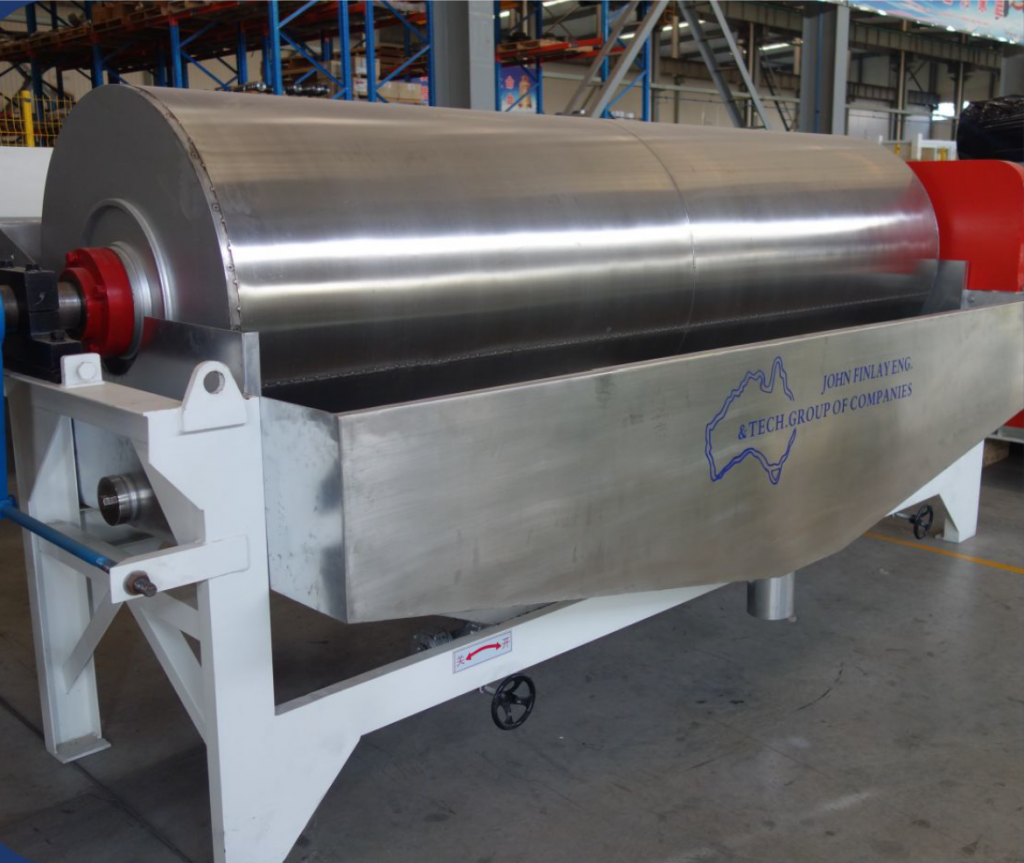
A magnetic separator recovering to its rated efficiency is the foundation the rest of this diagnosis depends on. Every other loss point on this list is easier to isolate once you know the drum itself isn't the source. If your separator hasn't been checked against rated recovery performance recently, that's where you should begin.
None of this requires shutting the circuit down to find out. A shift-length mass balance, a tailings sample, and an honest look at your density trend will tell you within a day whether you're close to 800 g/t or carrying a gap worth chasing and roughly which of the five loss points above is the likely cause.
Diagnosing Your Own Number
Before making any changes to the circuit, please establish your current position.
Run a magnetite mass balance over a full shift, comparing the mass of magnetite added to the tonnes of ROM washed in that same shift, rather than relying on monthly purchase records averaged against monthly throughput. Monthly figures smooth out exactly the upsets you're trying to find.
Check the magnetic separator tailings directly. A bucket sample and a hand magnet will tell you, qualitatively and quickly, whether magnetite is riding out with the reject in a way that shouldn't be happening. If it is, the drum is your starting point for investigation, not the makeup rate.
Sample what's leaving on the product and discard screens, not only what's leaving in the tailings stream. Carryover on clean coal is invisible unless someone specifically checks for it, and it's one of the more common blind spots on sites that only monitor the obvious loss points.
Track medium density against a setpoint across a full shift rather than relying on a single spot check. A circuit that chronically runs under density and receives fresh magnetite additions has a dilution problem disguised as a magnetite consumption problem.
Separate consumption from loss. Some magnetite leaves the circuit because it's genuinely degraded past the point of recovery for its consumption, and better magnetite quality addresses it. Some leave because a piece of equipment isn't performing to specification; that's a loss, and no amount of premium magnetite fixes it. Sites that treat both the same way keep buying their way around mechanical problems.
What Closing The Gap Is Worth
Before making any changes to the circuit, please establish your current position.
Run a magnetite mass balance over a full shift, comparing the mass of magnetite added to the tonnes of ROM washed in that same shift, rather than relying on monthly purchase records averaged against monthly throughput. Monthly figures smooth out exactly the upsets you're trying to find.
Check the magnetic separator tailings directly. A bucket sample and a hand magnet will tell you, qualitatively and quickly, whether magnetite is riding out with the reject in a way that shouldn't be happening. If it is, the drum is your starting point for investigation, not the makeup rate.
Sample what's leaving on the product and discard screens, not only what's leaving in the tailings stream. Carryover on clean coal is invisible unless someone specifically checks for it, and it's one of the more common blind spots on sites that only monitor the obvious loss points.
Track medium density against a setpoint across a full shift rather than relying on a single spot check. A circuit that chronically runs under density and receives fresh magnetite additions has a dilution problem disguised as a magnetite consumption problem.
Separate consumption from loss. Some magnetite leaves the circuit because it's genuinely degraded past the point of recovery for its consumption, and better magnetite quality addresses it. Some leave because a piece of equipment isn't performing to specification; that's a loss, and no amount of premium magnetite fixes it. Sites that treat both the same way keep buying their way around mechanical problems.
How John Finlay Helps
Closing a magnetite consumption gap starts with knowing whether your separator is actually recovering to spec. John Finlay's LF-HMDS wet drum separators are built for full counter-flow recovery efficiency, and our engineers can walk through a shift-length mass balance with your team to pinpoint which of these five loss points is driving your number. We support this as part of complete dense medium circuit design and ongoing service, not equipment supplied and left.