
SLURRY WATER CIRCUIT | CONCENTRATION MEASUREMENT
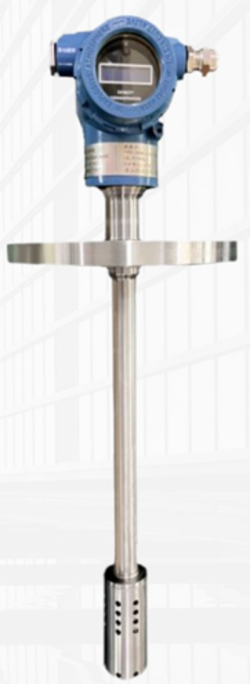
Tuning-Fork Concentration Meter
An insertion probe that measures concentration directly in the slurry stream with ±0.001 g/cm³ accuracy and ±0.0001 g/cm³ repeatability, built for continuous underflow density duty in demanding, abrasive conditions.
±0.001 g/cm³
Accuracy
0 – 2 g/cm³
Working Range
±0.0001 g/cm³
Repeatability
−25 to +120 °C
Process Temperature
DEFINITION & OVERVIEW
What is a Tuning-Fork Concentration Meter?
A tuning-fork concentration meter measures suspension density by inserting a vibrating fork element directly into the process stream. The fork's resonant frequency shifts in proportion to the density of the material it's immersed in, giving a direct, continuous concentration reading, the same underlying principle used across vibrating-fork instrumentation generally, applied here specifically to underflow concentration duty.
John Finlay's unit holds ±0.001 g/cm³ accuracy and ±0.0001 g/cm³ repeatability across a 0 to 2 g/cm³ working range precise enough to track concentration changes that matter for process control, not just a coarse indication. Wetted parts are available in 316L, Hastelloy, titanium, or zirconium, giving a materials option matched to the specific stream's abrasiveness and chemistry.
The engineered alternative is the Differential Pressure Density Meter. It computes density from the twin-flange pressure difference across a fixed vertical separation, so there is no insertion element in an abrasive stream, and the installed cost is materially lower. It also covers a wider range of 0 to 4 g/cm³, compared to this unit's 0 to 2 g/cm³ range at ±0.002 g/cm³ accuracy and ±0.001 g/cm³ for the tuning-fork probe. For any duty above 2 g/cm³, the differential pressure meter is the only one of the two that reaches it.
High-Precision Insertion Measurement
±0.001 g/cm³ accuracy and ±0.0001 g/cm³ repeatability from a vibrating fork element immersed directly in the process stream.
Material Options for Abrasive Duty
Wetted parts are available in 316L, Hastelloy, titanium, or zirconium, matched to the specific stream's abrasiveness and chemistry.
Explosion-Proof, Rated for Harsh Duty
Exd IIC T6 rating with an IP65 aluminum housing supports installation in demanding plant environments.
Parameter | Value |
|---|---|
Accuracy | ±0.001 g/cm³ |
Working Range | 0 – 2 g/cm³ (for duties above 2 g/cm³, see the Differential Pressure Density Meter, 0 – 4 g/cm³) |
Repeatability | ±0.0001 g/cm³ |
Process Temperature | −25 to +120 °C (to +150 °C to order) |
Wetted Parts | 316L, Hastelloy, titanium, or zirconium |
Max. Working Pressure | 2.5 MPa (6.3 MPa to order) |
Output | Four-wire, 4–20 mA / RS485, 24 V DC |
Explosion Protection / Housing | Exd IIC T6; IP65 aluminum housing |
KEY FEATURES
Key Features & Performance Highlights
High-Precision, High-Repeatability Measurement
±0.001 g/cm³ accuracy and ±0.0001 g/cm³ repeatability support tight concentration control, not just coarse monitoring the difference between reacting to a trend and reacting to noise.
Material Options for Abrasive or Corrosive Streams
316L, Hastelloy, titanium, or zirconium wetted parts let the instrument be matched to the specific abrasiveness and chemistry of the stream it's measuring, rather than a single compromise material.
Explosion-Proof Construction
Exd IIC T6 explosion protection with an IP65 aluminum housing supports installation in demanding plant environments where hazardous area certification matters.
WORKING PRINCIPLE
How the Tuning-Fork Concentration Meter Works
A vibrating fork element, immersed directly in the process stream, converts a frequency shift into a concentration reading.
Fork Immersion
The tuning-fork probe is inserted directly into the process stream, with the fork element immersed in the material being measured.
Resonant Vibration
The fork vibrates continuously at its natural resonant frequency in the process medium.
Density-Proportional Frequency Shift
The surrounding material's density damps and shifts the fork's resonant frequency in direct proportion to concentration.
Signal Processing
Onboard electronics convert the frequency shift into a concentration reading.
Signal Output
A four-wire 4–20 mA / RS485 output feeds the reading to the plant's control system.
TECHNICAL SPECIFICATIONS
Tuning-Fork Concentration Meter | Full Specification
Parameter | Value |
|---|---|
Accuracy | ±0.001 g/cm³ |
Working Range | 0 – 2 g/cm³ |
Repeatability | ±0.0001 g/cm³ |
Process Temperature | −25 to +120 °C (to +150 °C to order) |
Wetted Parts | 316L, Hastelloy, titanium, or zirconium |
Max. Working Pressure | 2.5 MPa (6.3 MPa to order) |
Output | Four-wire, 4–20 mA / RS485, 24 V DC |
Explosion Protection | Exd IIC T6 |
Housing | IP65 aluminum |
COMPARISON
Tuning-Fork vs. Differential Pressure Density Measurement
Tuning-Fork Concentration Meter (Insertion)
Differential Pressure Density Meter (Engineered Alternative)
Applications of the Tuning-Fork Concentration Meter
This instrument is specified wherever underflow or process stream concentration needs high-precision, continuous measurement.
Thickener Underflow Density
High-precision concentration measurement on thickener underflow, forming part of a complete thickener instrumentation system.
Dense Medium Circuit Concentration Checks
Precise concentration verification at points where accuracy matters more than installed cost.
Abrasive or Corrosive Slurry Streams
Material options (Hastelloy, titanium, and zirconium) extend this instrument into streams a standard stainless probe couldn't handle.
Hazardous Area Installations
Exd IIC T6 explosion protection supports installation where hazardous area certification is required.
Process Control Loops Requiring Tight Concentration Tracking
±0.0001 g/cm³ repeatability supports control loops that need to react to genuine trends, not measurement noise.
About John Finlay
Concentration Measurement Instrumentation Supplier in India
Why John Finlay?
±0.001
g/cm³ Accuracy
High-precision insertion measurement for demanding concentration control applications.
130+
Coal Washery Projects
Completed EPC projects worldwide, including Asia’s largest coking coal washery at 30 MTPA.
EPC
Full Circuit Supply
Supplied as part of a complete instrumentation and automation offering across the coal preparation flowsheet.
IN
India-Based Support
Manufactured at Hefei John Finlay Mining Equipment Co., Ltd. and supported locally in India for installation, commissioning, spares and service.
Tuning-Fork Concentration Meter | Frequently Asked Questions
Common questions from engineers in coal washery processes evaluating insertion-type concentration measurement.
A vibrating fork element is inserted directly into the process stream. The surrounding material’s density shifts the fork’s resonant frequency in direct proportion to concentration, giving a continuous, precise reading.
The measurement has an accuracy of ±0.001 g/cm³ and a repeatability of ±0.0001 g/cm³ across a working range of 0 to 2 g/cm³.
Wetted parts are available in 316L, Hastelloy, titanium, or zirconium, letting the instrument be matched to the specific abrasiveness and chemistry of the stream.
Yes, the Differential Pressure Density Meter has no insertion element in the stream and a materially lower installed cost, and it covers 0 to 4 g/cm³ against this unit’s 0 to 2. The trade-off is accuracy of ±0.002 g/cm³ versus ±0.001 g/cm³; here is a 2x difference. Choose the tuning-fork probe when the extra precision matters; choose the differential pressure meter when abrasion, cost or a range above 2 g/cm³ decides it.
Yes, the unit carries Exd IIC T6 explosion protection with an IP65 aluminum housing.
Yes, it’s one of four instruments in John Finlay’s Dense Medium Control System (S1), alongside density, level and pressure measurement, plus the control scheme that ties them together.
Not sure whether insertion or differential pressure concentration measurement fits your stream?
Our engineers can help you weigh accuracy against abrasion risk, range and installed cost for your specific application.
Talk to an ExpertRelated Equipment
Instrumentation Hub
All packaged instrumentation systems, grouped by process area.
Magnetic Content Meter
Another concentration-adjacent measurement in the dense medium circuit.
Thickener Instrumentation System (S2)
This meter is one of the instrument options in the full thickener system.
Differential Pressure Density Meter
The engineered alternative has a wider 0–4 g/cm³ range, no insertion element, lower installed cost.