
SLURRY WATER CIRCUIT | GENERAL INSTRUMENTATION
Ultrasonic Mud-Water Interface Meter
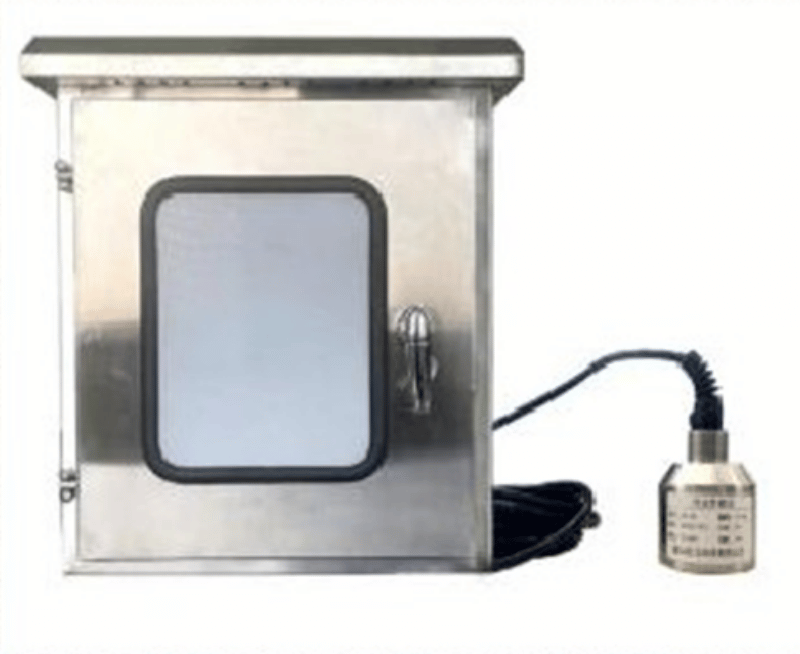
Split-type ultrasonic measurement of the mud-water interface at the bed level tells you how much solids inventory is actually sitting in your thickener, tracked continuously rather than estimated.
5 / 10 / 15 / 20 m (to 70 m to order)
Range
1–3%
Accuracy
5 mm
Resolution
Up to 4
Programmable Relays
DEFINITION & OVERVIEW
What is an Ultrasonic Mud-Water Interface Meter?
A mud-water interface meter measures where the boundary sits between settled solids (the mud or sludge bed) and the clearer water above it inside a thickener—the bed level that determines how much solids inventory is actually in the vessel at any given moment.
John Finlay's unit is a split-type design with a 4-20 mA output into a 750 Ω load, providing flexibility in how the signal is wired into existing instrumentation. Range options cover 5, 10, 15, and 20m as standard, extending to 70m to order for larger thickeners.
Up to four programmable relays support local alarming directly from the instrument—useful for triggering an alert if bed level rises toward overflow or drops below a minimum operating level, without waiting on a SCADA-side alarm configuration.
Continuous Bed Level Tracking
Measures the mud-water interface continuously, rather than relying on periodic manual sampling or visual estimation.
Split-Type Design
4-20 mA output into a 750 Ω load gives flexibility in wiring the signal into existing plant instrumentation.
Local Alarming Built In
Up to four programmable relays support local alarm triggers directly from the instrument.
Parameter | Value |
|---|---|
Design Type | Split type |
Output | 4–20 mA into 750 Ω |
Range | 5 / 10 / 15 / 20 m standard; up to 70 m to order |
Accuracy | 1 – 3% |
Resolution | 5 mm |
Indicator Rating | IP65 |
Probe Rating | IP68 |
Relays | Up to four, programmable |
Power Supply | 220 V AC or 24 V DC |
KEY FEATURES
Key Features & Performance Highlights
It is built specifically for thickener bed level tracking, where knowing solids inventory continuously matters more than a periodic manual check.
Extended Range to 70m
Standard ranges of 5, 10, 15, and 20m cover most thickeners, with an order option extending to 70m for larger vessels—a wide enough range to avoid needing a different instrument line for bigger installations.
Split-Type 4-20 mA Design
The split-type configuration with a 4-20 mA output into a 750 Ω load provides flexibility in cable runs and integration with existing instrumentation, rather than a fixed integral design.
Four Programmable Relays
Local alarm relays can be configured directly on the instrument, supporting immediate alerting on bed-level excursions without depending entirely on a remote SCADA alarm configuration.
WORKING PRINCIPLE
How the Ultrasonic Mud-Water Interface Meter Works
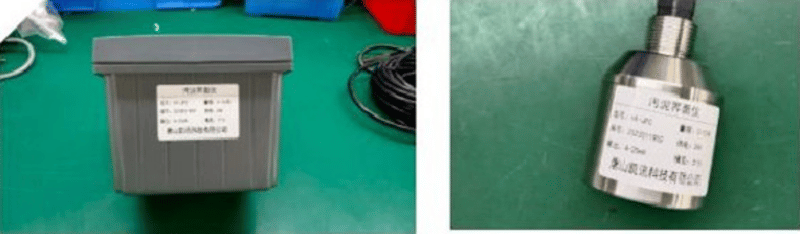
The instrument tracks the boundary between settled solids and clear water using ultrasonic reflection.
Pulse Emission
The transducer emits an ultrasonic sound pulse toward the material surface.
Surface Reflection
The pulse reflects off the surface and returns to the transducer.
Intelligent Echo Analysis
Onboard processing analyzes the returned signal automatically, distinguishing the genuine surface echo from false reflections; no manual commissioning step is required.
Level Calculation
Level is calculated from the time taken for the pulse to travel to the surface and back to 1 mm resolution.
Signal Output
Level data outputs via 4–20 mA for direct integration into plant control and monitoring systems.
TECHNICAL SPECIFICATIONS
Ultrasonic Level Transmitter | Full Specification
Specifications sourced directly from John Finlay’s instrumentation documentation.
Parameter | Value |
|---|---|
Range | 0 – 15 m |
Blind Zone | 0.45 – 0.6 m |
Resolution | 1 mm |
Output | 4–20 mA |
Power Supply | 24 V DC |
Ingress Protection | IP65 |
Commissioning | None required—intelligent echo analysis |
COMPARISON
Ultrasonic vs. Radar Level Measurement
Ultrasonic Level Transmitter
Radar Level Transmitter
Applications of the Ultrasonic Level Transmitter
Ultrasonic level measurement is a straightforward, cost-effective choice wherever the environment is relatively clean and the range requirement is within 15m.
Tank and Bin Level Monitoring
Covers the common tank and bin level duty found throughout a coal washery without paying for radar's longer range.
Process Vessel Level Control
1 mm resolution supports tighter level control on process vessels than a coarser measurement method.
Retrofit-Friendly Installations
No commissioning steps are needed, making this a fast retrofit onto existing vessels with minimal setup time.
Clean-Air Environments
Best suited to areas without heavy dust or vapor, where ultrasonic performance isn't degraded for dustier duty, see our Radar Level Transmitter.
Multi-Point Level Installations
The lack of commissioning steps makes deploying several units across a plant significantly faster than instruments requiring individual setup.
General Plant Level Monitoring
A cost-effective default for level measurement wherever extreme range or process temperature isn't the deciding factor.
About John Finlay
Level Measurement Instrumentation Supplier in India
Why John Finlay?
1mm
Resolution
Fine-resolution level measurement across a practical 15m range.
130+
Coal Washery Projects
Completed EPC projects worldwide, including Asia’s largest coking coal washery at 30 MTPA.
EPC
Full Circuit Supply
Supplied as part of a complete instrumentation and automation offering across the coal preparation flowsheet.
IN
India-Based Support
Manufactured at Hefei John Finlay Mining Equipment Co., Ltd. and supported locally in India for installation, commissioning, spares and service.
Ultrasonic Level Transmitter | Frequently Asked Questions
Common questions from engineers in coal washery processes evaluating non-contact ultrasonic level measurement.
Ultrasonic measurement is a lower-cost option suited to clean-air environments within a 15m range. Radar costs more but is unaffected by dust or vapor and covers up to 120 m; see our Radar Level Transmitter page for that comparison in more depth.
No, intelligent echo analysis processes the return signal automatically, so the unit is reading correctly as soon as it’s installed and powered, without a setup procedure.
0.45 to 0.6m near the transducer face, where measurement isn’t possible. This area is a normal characteristic of ultrasonic sensing and needs to be accounted for in mounting height, not a fault.
Heavy dust or vapor can affect ultrasonic performance. For those conditions, our Radar Level Transmitter is the better-suited instrument.
1 mm across the full 0 to 15m range.
Not sure if ultrasonic or radar is the right fit for your level point?
Our engineers can help you match the instrument to your actual environment and range requirement.
Talk to an Expert