
CYCLONES | COAL SLURRY RECOVERY
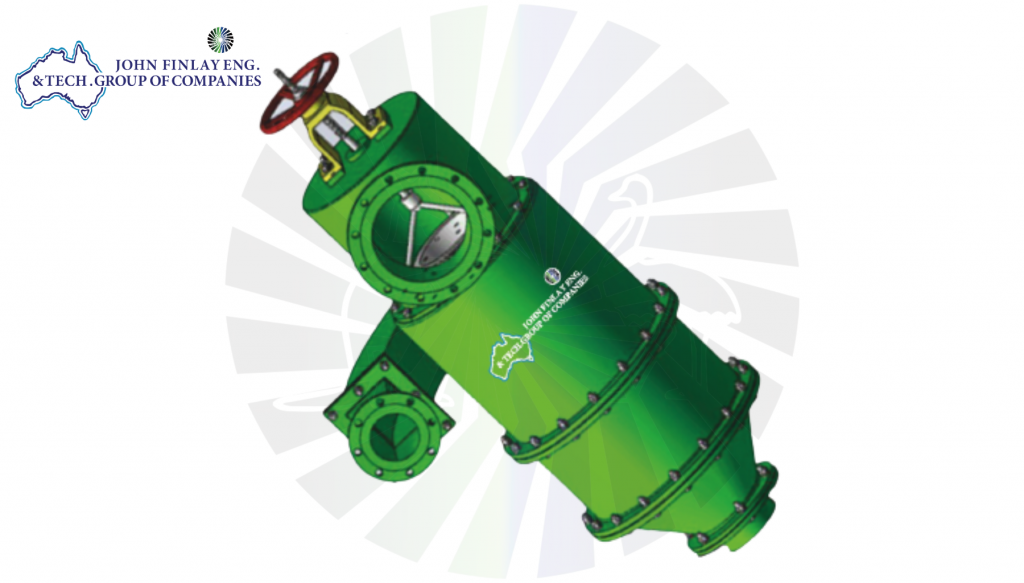
Water-Only Cyclone
Engineered for efficient recovery of coal slurry in coal preparation plants and pre-flotation pulp thickening applications, a high-precision internal structure and superior wear-resistant lining deliver classification performance without dense medium.
Water-Only Cyclone
1,250 mm
Maximum Size
1,300 m³/h
Processing Capacity
0.04–0.3 mm
Grading Particle Size
High-Al₂O₃ Alumina Ceramic
Liner
DEFINITION & OVERVIEW
What is a Coal Slurry hydrocyclone?
John Finlay's Coal Slurry Hydro Cyclone is engineered for efficient recovery of coal slurry in coal preparation plants and pre-flotation pulp thickening applications. The cyclone features a high-precision internal structure, optimized surface finish, and superior wear-resistant lining to deliver excellent classification performance.
The outer wall includes a pre-classification volute design that separates feed solids before entering the cyclone body, and the lower section is lined with premium alumina ceramics, extending wear life and reducing maintenance interventions.
A named sub-variant of the Coal-Specific Concentrated Classification Hydrocyclone is designed for processing dilute coal slurry by separating particles of varying mass, improving fine coal recovery (≤0.5mm), reducing solid content in circulating water, and enhancing slurry quality. To increase throughput, small-diameter units can be grouped in parallel, while large-diameter models can operate independently in high-capacity circuits.
Pre-Classification Volute Design
The outer wall separates feed solids before they enter the cyclone body, ahead of the main classification stage.
High-Alumina Ceramic Lining
The lower section is lined with premium alumina ceramics (high Al₂O₃ content) for exceptional wear resistance and minimized maintenance.
Scalable by Parallel Grouping
Small-diameter units group in parallel for higher throughput; large-diameter models run independently in high-capacity circuits.
Parameter | Value |
|---|---|
Maximum Size | 1,250 mm |
Processing Capacity | 1,300 m³/h |
Grading Particle Size | 0.04 – 0.3 mm |
Fine Coal Recovery Target (sub-variant) | ≤ 0.5 mm |
Liner Material | Premium alumina ceramics, high Al₂O₃ content |
Outer Wall Design | Pre-classification volute |
KEY FEATURES
Key Features & Performance Highlights
Every figure and feature below is drawn directly from John Finlay's own product brochure.
High-Precision Internal Structure
An optimized surface finish and precision internal geometry deliver excellent classification performance, engineered specifically for coal slurry recovery duty.
Pre-Classification Volute Outer Wall
The outer wall design separates feed solids before they enter the cyclone body, a pre-classification step that reduces misplaced material reaching the main separation zone.
Premium Alumina Ceramic Lining
The lower section is lined with high-Al₂O₃ alumina ceramics for exceptional wear resistance, minimizing maintenance interventions over the unit's service life. Lining is tailored to varying coal qualities and plant conditions by the Hefei John Finlay engineering team.
WORKING PRINCIPLE
How the Coal Slurry Hydro Cyclone Works
Classification happens through centrifugal separation, with a pre-classification step ahead of the main cyclone body.
Pre-Classification at the Outer Wall
Feed solids are separated at the outer wall's volute design before entering the main cyclone body.
Tangential Feed Entry
Coal slurry enters the cyclone body under pressure, setting up the centrifugal flow pattern.
Centrifugal Classification
Particles of varying mass separate under centrifugal force, moving through the alumina-ceramic-lined lower section.
Fine Coal Recovery
In the Coal-Specific Concentrated Classification variant, fine coal (≤0.5mm) is recovered from dilute slurry, reducing solid content in circulating water.
Parallel or Independent Operation
Small-diameter units are grouped in parallel to scale throughput; large-diameter models operate independently in high-capacity circuits.
TECHNICAL SPECIFICATIONS
Coal Slurry Hydro Cyclone | Full Specification
Real specifications sourced directly from John Finlay’s product brochure, confirmed by the JFI team as the correct source for this page.
Parameter | Specification |
|---|---|
Maximum Size | 1,250 mm |
Processing Capacity | 1,300 m³/h |
Grading Particle Size | 0.04 – 0.3 mm |
Fine Coal Recovery Target (sub-variant) | ≤ 0.5 mm |
Liner Material | Premium alumina ceramics, high Al₂O₃ content |
Outer Wall Design | Pre-classification volute |
Scalability | Small-diameter: parallel grouping. Large-diameter: independent, high-capacity |
COMPARISON
Coal Slurry Hydro Cyclone vs. Dense Medium Cyclone
Coal Slurry Hydro Cyclone
Dense Medium (HM) Cyclone
Applications of the Coal Slurry Hydrocyclone
Named directly in John Finlay's own product documentation as the scope of application for this equipment.
Coarse Slime Recovery
Direct named application recovering coarse slime from coal slurry streams in coal preparation plants.
Coal Slurry Classification
Classifying coal slurry by particle size as part of the broader coal preparation flowsheet.
Pre-Flotation Thickening
Thickening pulp ahead of froth flotation, named directly as a core application in JFI's own brochure.
Fine Coal Recovery from Dilute Slurry
The Coal-Specific Concentrated Classification variant recovers fine coal (< 0.5 mm) from dilute slurry while reducing solid content in circulating water.
About John Finlay
Coal Slurry Hydro Cyclone Supplier in India
Why John Finlay?
1,300
m³/h Processing Capacity
Real, confirmed capacity figure from John Finlay’s own product brochure.
130+
Coal Washery Projects
Completed EPC projects worldwide, including Asia’s largest coking coal washery at 30 MTPA.
EPC
Full Circuit Supply
Supplied as part of complete process equipment packages for both coal and non-coal mineral processing circuits.
IN
India-Based Support
Manufactured at Hefei John Finlay Mining Equipment Co., Ltd. and supported locally in India for installation, commissioning, spares and service.
Coal Slurry Hydro Cyclone | Frequently Asked Questions
Common questions from engineers in coal washery processes evaluating coal slurry classification and recovery.
It recovers coal slurry and classifies it by particle size, using centrifugal separation with a pre-classification volute design at the outer wall, so no dense medium is required.
Maximum size of 1,250mm with a processing capacity of 1,300 m³/h, handling a grading particle size of 0.04 to 0.3mm.
A version designed for dilute coal slurry, recovering fine coal to ≤0.5mm and reducing solid content in circulating water. Small-diameter units group in parallel for throughput; large-diameter models run independently in high-capacity circuits.
The lower section is lined with premium alumina ceramics (high Al₂O₃ content), tailored to varying coal qualities and plant conditions by the Hefei John Finlay engineering team.
This equipment classifies and recovers coal slurry without a dense medium; it’s a different duty entirely from density-based separation. See our Three Product Cyclone page for dense medium cyclone detail.
Need to recover more fine coal from your slurry stream?
Our engineers can review your slurry characteristics and recommend the right Coal Slurry hydrocyclone configuration.
Talk to an ExpertRelated Equipment
Hydro Cyclone
The non-coal, multi-industry hydrocyclone platform.
Classifying Cyclone
Fine coal slurry classification
Three Product Cyclone
Dense medium separation, the density-based alternative.