
Non-Full-Pipe Electromagnetic Flowmeter
Most flowmeters assume the pipe is running full. Thickener feed lines, open channels and drainage runs often aren’t this instrument measures flow correctly on exactly those partially filled lines, using the velocity-area method rather than a full-bore assumption that simply doesn’t hold.
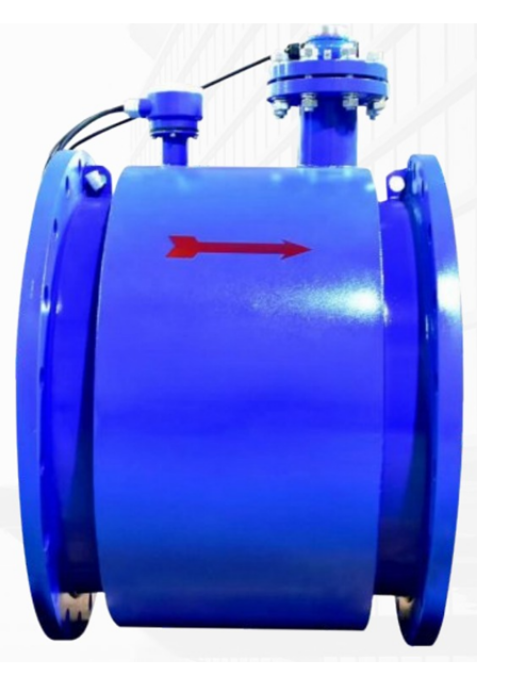
DN100 – DN6000
Nominal Bore
±1.5%
Flow Accuracy
0.05 – 10 m/s
Velocity Range
±2 mm
Level Accuracy
DEFINITION & OVERVIEW
What is a Non-Full-Pipe Electromagnetic Flowmeter?
A standard electromagnetic flowmeter assumes the pipe is running completely full, because its flow calculation depends on the cross-sectional area being constant and known. Thickener feed lines, open Channels and gravity drainage runs frequently don't meet that assumption; they run partially filled, with the liquid level itself varying, which means a standard full-pipe flowmeter simply isn't measuring the right thing on these lines.
This instrument solves that with the velocity-area method: an electromagnetic velocity sensor and a separate level sensor both feed a single converter, the user enters the actual pipe bore, and the instrument computes flow directly from measured velocity and measured level rather than assuming a fixed full-bore area.
The range is built for the scale; a thickener feed line or drainage channel actually needs circular bores from DN100 up to DN6000 or rectangular channels up to 6 m wide, which is a considerably wider range than a standard full-pipe flowmeter line typically covers.
How It Works
The electromagnetic velocity sensor and level sensor feed one converter; flow is computed from measured velocity and level against the entered pipe bore.
Built for Partial Flow
Purpose-built for thickener feed lines, open channels and drainage runs that don't run full, not adapted from a full-pipe design.
Wide Size Range
Circular bores DN100–DN6000 or rectangular channels up to 6 m wide scaled for real thickener and channel duty.
Parameter | Value |
|---|---|
Nominal Bore | Circular DN100–DN6000; rectangular width ≤ 6 m |
Velocity Range | 0.05 – 10 m/s |
Conductivity Requirement | ≥ 20 µS/cm |
Medium Temperature | ≤ 60 °C |
Level Accuracy | ± 2 mm |
Velocity Accuracy | ± 1.0% |
Flow Accuracy | ± 1.5% |
Current Output | 4–20 mA (load ≤ 500 Ω) |
Pulse Output | 1 – 2000 Hz |
Power Supply | 220 V AC or 12/24 V DC |
Communication | RS232 and RS485; GSM/GPRS optional |
KEY FEATURES
Key Features & Performance Highlights
Two separate measurements velocity and level, combine into one flow reading, which is what makes accurate measurement possible on a line that isn't running full.
Velocity-Area Measurement Method
An electromagnetic velocity sensor and a level sensor both feed a single converter, which computes flow from actual measured velocity and level against the entered pipe bore, not an assumed full cross-section.
Wide Bore and Channel Range
Covers circular bores from DN100 to DN6000, plus rectangular open channels up to 6 m wide, which spans the scale of both smaller thickener feed lines and larger drainage or open-channel applications.
Full Local and Remote Data
Displays instantaneous flow, velocity and totalized flow directly at the instrument, with 4–20 mA current output, pulse output, and RS232/RS485 communication for integration elsewhere in the plant.
WORKING PRINCIPLE
How the Non-Full-Pipe Flowmeter Works
The velocity-area method separates the two variables that a partially filled line actually needs to measure.
Velocity Sensing
An electromagnetic velocity sensor measures the actual flow velocity of the liquid in the partially filled line.
Level Sensing
A separate level sensor measures the actual liquid level in the same line, since this varies and directly determines the wetted cross-sectional area.
Bore Entry
The user enters the actual pipe bore (or channel width) into the converter, giving it the geometry needed to calculate cross-sectional area at any given level.
Flow Computation
The converter combines measured velocity, measured level, and the entered bore to compute instantaneous flow directly, rather than assuming a fixed full-pipe area.
Data Output
Instantaneous flow, velocity and totalized flow are displayed locally, with 4–20 mA, pulse, RS232/RS485, and optional GSM/GPRS output available for remote systems.
TECHNICAL SPECIFICATIONS
Non-Full-Pipe Electromagnetic Flowmeter | Full Specification
Specifications sourced directly from John Finlay’s instrumentation documentation.
Parameter | Specification |
|---|---|
Nominal Bore | Circular DN100–DN6000; rectangular width ≤ 6 m |
Velocity Range | 0.05 – 10 m/s |
Conductivity | ≥ 20 µS/cm |
Medium Temperature | ≤ 60 °C |
Accuracy | Level ± 2 mm · velocity ± 1.0% · flow ± 1.5% |
Current Output | 4–20 mA (load ≤ 500 Ω) |
Pulse Output | 1 – 2000 Hz |
Power Supply | 220 V AC or 12/24 V DC |
Communication | RS232 and RS485; GSM/GPRS optional |
COMPARISON
Non-Full-Pipe vs. Standard Full-Pipe Flowmeter
Non-Full-Pipe Electromagnetic Flowmeter
Standard Full-Pipe Flowmeter
Applications of the Non-Full-Pipe Electromagnetic Flowmeter
This instrument is specifically designed for lines and channels that do not run fully under common conditions in slurry water and thickener circuits, where a standard flowmeter cannot measure correctly.
Thickener Feed Lines
Feed lines into a thickener frequently run partially filled, making the flowmeter the correct instrument for accurately measuring feed flow.
Open Channel Flow
Rectangular channels up to 6 m wide are directly supported, covering drainage and open-channel applications across the plant.
Drainage Systems
Plant drainage runs, which rarely run full, are measured accurately using the same velocity-area method.
Water Balance Calculations
Accurate flow data on partially filled circuit lines supports plant-wide water balance calculations that would otherwise have a blind spot.
Remote and SCADA Integration
RS232/RS485 and optional GSM/GPRS communication support remote monitoring on lines that may be physically distant from the control room.
Large-Bore or Wide-Channel Retrofits
The DN100–DN6000 and 6 m channel range covers retrofits onto existing large lines and channels that a standard flowmeter range wouldn't reach.
About John Finlay
Flow Measurement Instrumentation Supplier in India
Why John Finlay?
±1.5%
Flow Accuracy
Computed from independently measured velocity (±1.0%) and level (±2 mm).
50+
Years of Coal Washery Experience
150+ coal washery projects completed. Designed Asia’s largest coking coal washery at 30 MTPA.
EPC
Full Circuit Supply
Supplied as part of a complete instrumentation and automation offering, integrated with density and process control instrumentation.
IN
India-Based Support
Engineered in-house and supported locally in India for installation, commissioning, and service.
Non-Full-Pipe Electromagnetic Flowmeter | Frequently Asked Questions
Common questions from engineers in coal washery processes evaluating flow measurement on partially filled lines.
A standard flowmeter’s flow calculation assumes a constant, full cross-sectional area. On a partially filled line, the actual wetted area varies with liquid level, so a full-pipe assumption produces an incorrect flow reading, sometimes significantly so.
Thickener feed lines, open channels, and drainage runs where flow does not reliably fill the full pipe or channel cross-section.
Circular bores from DN100 to DN6000, or rectangular open channels up to 6 m wide.
Flow accuracy is ±1.5%, built from independently measured velocity (±1.0% accuracy) and level (±2 mm accuracy) combined with the entered pipe bore.
Yes, it provides 4–20 mA current output, pulse output, and RS232 and RS485 communication, with optional GSM/GPRS for remote or distant installations.
Not sure if your line is actually running full?
Our engineers can help you determine whether a standard or non-full-pipe flowmeter is the right fit for your line.
Talk to an ExpertRelated Equipment
Electromagnetic Flowmeter
The full-pipe counterpart for pressurized conductive-liquid lines.
Thickener Instrumentation System
This flowmeter is one of the instruments in the full thickener system.