John Finlay Group Of Companies

Automation & Instrumentation

A coal washery generates a constant stream of data on density, flow, particle size, medium quality and the plants that perform best act on it before a problem becomes downtime, not after.

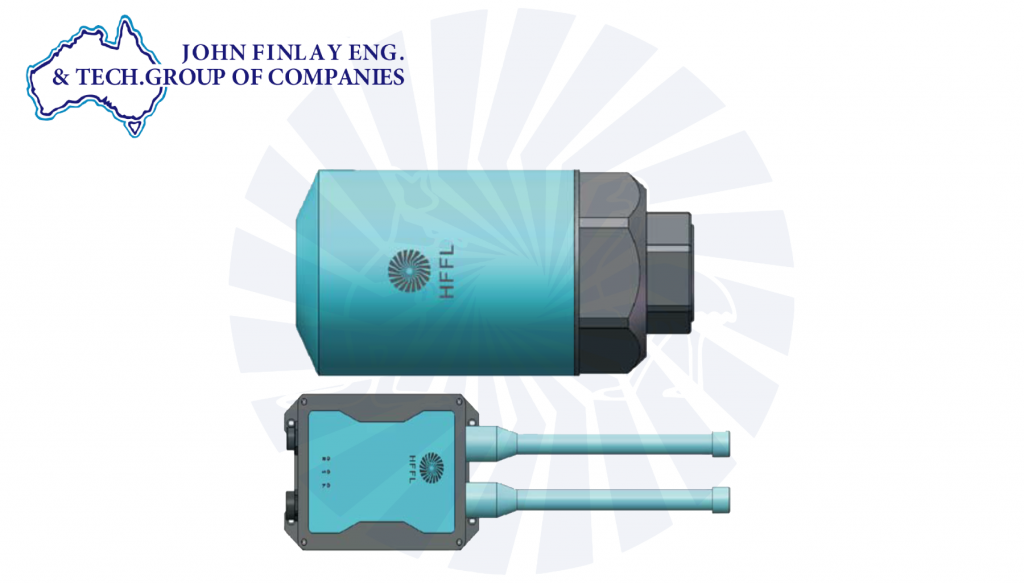
John Finlay’s answer to this challenge is the Intelligent Early Warning Health Examination System, built in four parts: a data collection layer monitoring the running condition of key equipment parts, wireless data transmission, a data processing system that compares live readings against historical failure patterns, and a health report sent directly to equipment managers before a breakdown happens. It’s available across the equipment range screens, centrifuges, magnetic separators, and dense medium baths, not limited to a single product line.

This category covers automation architecture for coal washeries, instrumentation selection, and how predictive, sensor-driven monitoring is changing plant-level decision-making in coal beneficiation, grounded in a system that John Finlay has actually built and deployed, not a general industry trend piece.

Explore further: Intelligent Early Warning Sensors · Slurry Density Meter

See our Automation services for full plant-wide systems.

Intelligent Early Warning Sensors for Mining & Equipment Monitoring | John Finlay Eng

What Early Warning Sensors Catch Before a Failure Costs You a Shift

What Early Warning Sensors Catch Before a Failure Costs You a Shift Every rotating piece of equipment in a coal washery will eventually fail. That’s not a controversial statement; it’s physics. The only operational question is whether the equipment warns you in time to act or just stops. That distinction is the entire logic behind early warning sensors, and it’s also the thing most plants get backwards. The instinct is to sensor everything and call it predictive maintenance. The more useful question is narrower: which failure modes on your circuit actually give warnings, and which ones don’t because sensors only help with the first kind? Get that distinction right, and a modest sensor package earns its cost quickly. Get it wrong, and you risk ending up with a dashboard that nobody trusts. Most washeries already run some form of automation for density and process control. Early warning sensing is a natural extension of that same layer rather than a separate system bolted on afterward. The value comes from feeding condition data into a place where a maintenance planner actually looks, not from the sensor hardware itself. What Actually Gives Warning Most mechanical degradation is gradual, which means it leaves a trail before it becomes a failure. A bearing running out its grease life doesn’t seize instantly; it runs hotter and rougher for days or weeks first, showing up in vibration signature and temperature trend before it locks up. A motor drawing more current than its baseline is usually fighting something, a misaligned coupling, a partially blocked screen, or a pump working against a restriction well before that something becomes an unplanned stop. Screen-deck wear thins out gradually and shows up as a slow drift in throughput or product moisture long before a panel actually fails and lets material through unscreened. These are the failure modes early warning sensors are built for: continuous trend data that separates the normal operating range from drifting toward a problem days or weeks ahead of the stop. What early warning sensors can and can’t catch What Doesn’t Not every failure gives that lead time, and it’s worth being honest about which ones don’t, because it changes what you actually protect against with sensors versus what you protect against through design and housekeeping. Tramp metal or oversize rock striking a crusher or screen can introduce sudden mechanical damage with no meaningful trend beforehand; the equipment was fine one minute and damaged the next. Sudden electrical faults, particularly insulation breakdown, often show little warning in the data an ordinary sensor package is watching. Structural fatigue cracks can propagate from undetectable to critical faster than a normal monitoring interval catches, particularly under cyclic loading on screen frames and support structures. The practical implication: a sensor package won’t turn every failure into a scheduled one. What it does is take the failures that were always going to give a warning, which are most of them on a typical washery. and actually put that warning somewhere useful, instead of leaving it as a sound an experienced operator might have caught on a good day and missed on a busy one. What One Unplanned Shift Actually Costs This is the number that gets a requisition signed, and it’s worth working out for your plant rather than borrowing someone else’s figure. Add up lost throughput for the stopped hours at your plant’s tonnes-per-hour rate, valued at your realization price for clean coal. Add the labor cost of the crew standing by or called in for emergency repair, typically at a premium over scheduled maintenance labor. Add expedited parts freight, which, on an unplanned stop, is often several times the cost of the same part ordered on a normal lead time. And if the stop occurs during a period when you’re committed to dispatching tonnage, also include any contractual or goodwill costs that may arise. Run that arithmetic once for your plant, and the business case for early warning tends to write itself because the sensor package and the platform that reads it usually cost a small fraction of a single avoided unplanned shift, not a large one. Avoiding the Opposite Problem The failure mode of the sensor program itself is over-instrumenting without proper thresholds. Sensor every point on the circuit, set every alarm to trigger at the first sign of deviation, and within a few weeks the control room is drowning in alerts that don’t distinguish a genuine early warning from ordinary operating noise. Operators start ignoring the dashboard, which defeats the entire purpose more thoroughly than not having sensors at all. At least without sensors, everyone knows to rely on physical inspection. Thresholds need to be set against each asset’s own baseline, not a generic default, and the alert list needs to stay short enough that every alert on it is one someone will actually act on. Where the Coverage Actually Pays Off Magnetic separators, dense media cyclones, screens and centrifuges each have their own dominant failure modes, but the pattern of gradual degradation with a trend versus sudden and largely trend-free repeats across all of them. Bearing and seal wear, motor loading, and mechanical vibration are the categories where continuous monitoring earns its cost fastest, because they’re both common failure points and reliably gradual ones. We’ve built early warning sensor integration directly into circuit monitoring for centrifuge operations specifically, feeding real-time condition data, not just a snapshot at the next scheduled inspection, into the same automation layer used for density and process control. The value isn’t the sensor itself; it’s having that data land somewhere a maintenance planner actually looks before the trend becomes a stop. Where to Start You don’t need to instrument the whole plant on day one. Start with whichever asset currently causes your longest unplanned stops when it fails; that’s usually where the payback is fastest because the cost of the next unplanned event is the baseline you’re already living with. Build outward from there once the first installation is proving its case in your

What Early Warning Sensors Catch Before a Failure Costs You a Shift Read More »

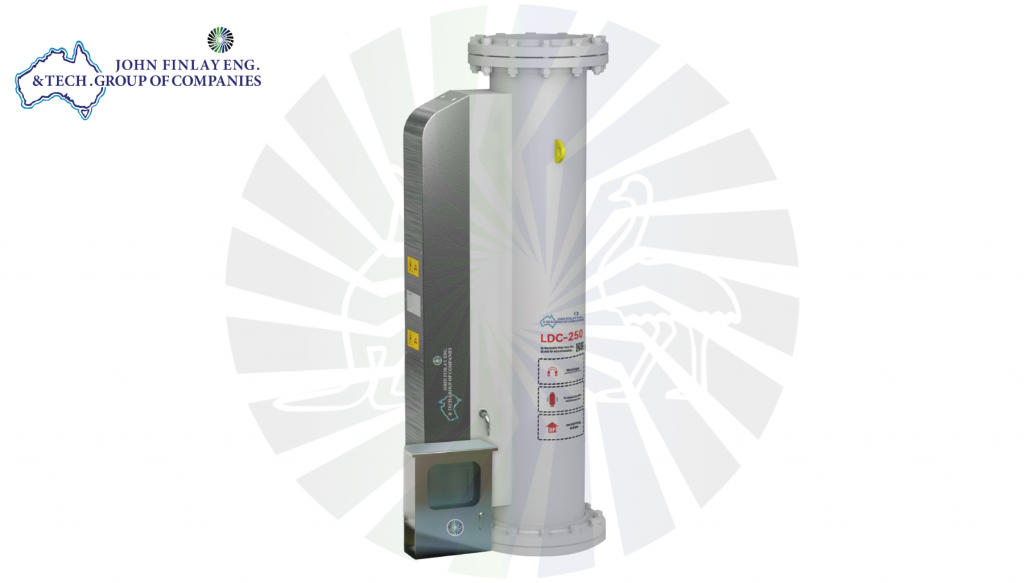
LDC Series intelligent non-nucleonic slurry density meter by John Finlay Engineering for coal washery and mineral processing

Density Control in the Media Loop

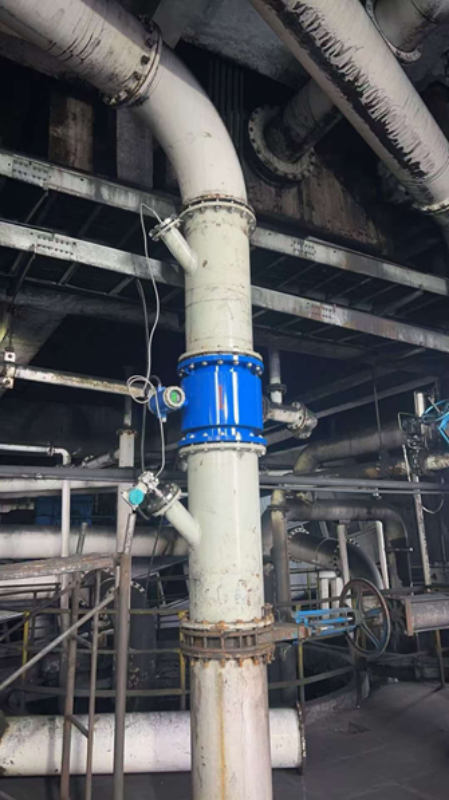
Density Control in the Media Loop: What to Measure and Why It Drifts Every dense medium circuit runs on one number more than any other: medium density, usually held to a target specific gravity within a narrow band. Get that number right and the circuit does what it was designed to do. Let it drift, and the effects show up as yield loss and ash penalties before anyone traces the cause back to density control, usually because a plant is checking density less often and less precisely than the number actually needs. It’s also one of the more straightforward instrumentation decisions in a coal washery. Unlike a lot of process changes that require weighing tradeoffs, continuous density measurement at the right points has a fairly direct case: the technology is mature, the installation is routine, and the payback tends to be short once the numbers are actually run for your own plant. Where Density Should Be Measured Most washeries measure density somewhere in the medium loop. Few measure it everywhere the loop actually needs it. Feed density to the cyclone is the measurement that matters most, because it directly sets the cut point. A single continuous reading upstream of the cyclone, rather than a periodic manual sample, is the minimum viable setup, but it only tells you what’s entering the cyclone, not what’s happening to the medium once it’s inside. Underflow and overflow density, measured separately, close the loop. Comparing underflow density against feed density tells you whether the medium is behaving the way the cyclone geometry assumes it should; a widening or narrowing gap between the two is often the earliest sign of a problem elsewhere in the circuit, well before it shows up in yield or ash figures. The dilution water addition point is the fourth place worth instrumenting because that’s where most density corrections actually get made manually, in many plants, based on the same feed density reading the operator is trying to correct in the first place. Why the Number Drifts Density drift usually comes from multiple causes. A few show up repeatedly. Dilution water balance is the most common. Excess water enters the circuit through spray systems, washdown, or upstream process water, diluting the medium; the standard response is to add more magnetite to compensate rather than fixing the water balance itself. We’ve covered this specific failure mode in detail in our post on magnetite consumption benchmarks. Density drift and magnetite consumption often have the same root cause, showing up as two different symptoms. Magnetite quality also drives density drift, independent of water balance. Off-spec magnetite with the wrong SG and wrong particle size changes how much solids loadinis needed to hold a given medium density, sons an operator correcting density based on a fixed magnetite addition rate is chasing a moving target. We go into the specification numbers that matter here in a separate post on magnetite granulometry. Instrument drift itself is worth ruling out before assuming the process is at fault. Density meters need periodic calibration checks; a meter reading consistently high or low by a fixed offset looks identical, on a trend chart, to a genuine process drift. Sensing line blockage or buildup gradually skews readings without an obvious failure event; the meter keeps reporting a number, just not the right one. None of these causes are mutually exclusive, and on plants that have been running the same instrumentation setup for years without review, it’s common to find two of them compounding a water balance issue masked by a meter that’s also drifted out of calibration, for instance, with each one making the other harder to diagnose from the trend data alone. Four points worth measuring in the medium loop What Drift Actually Costs The mechanism is straightforward even when the number is specific to your plant. A shift in medium SG moves the cut point, and moving the cut point either sends coal that should have reported to product into the reject stream, a direct yield loss, or lets higher-density, higher-ash material through to product, showing up as a quality penalty on every tonne shipped rather than a single dramatic event. Because the effect is gradual and distributed across every tonne processed rather than concentrated in an obvious failure, density drift is one of the easier problems to underprice. A 50 kg/m³ drift sustained over a full shift affects every tonne that shift processes, not just a batch. Density drift is also only half of what determines separation performance; the other half is how sharp that separation is at whatever cut point you’re holding, which is a function of the cyclone itself rather than the medium loop. We cover the mechanical side of that in our post on cut point control in heavy media cyclone circuits. The Payback Arithmetic Continuous, correctly located density instrumentation is inexpensive relative to what it protects. The comparison is worth running for your own plant: take your current yield or ash variance attributable to density drift, even a rough estimate from your own QC data; value it against your realization price; and compare that monthly figure against the cost of a properly specified density meter at the points that actually matter. For most plants, the payback period on closing that gap is short, which is part of why this is one of the more straightforward equipment decisions in a coal washery; the case tends to make itself once the numbers are actually run, rather than needing to be argued. How John Finlay Helps Getting density instrumentation right starts with placing it at the points in the loop that actually drive the cut point, not just wherever’s convenient to install. John Finlay’s Intelligent Slurry Density Meters are built for exactly this continuous, real-time monitoring feeding directly into the same automation layer as our Dense Media Cyclones and Magnetic Separators. If you’re not sure where your circuit’s biggest density blind spot is, our engineers can walk your loop with you and point to it directly. Not sure

Density Control in the Media Loop Read More »