
Where Density Should Be Measured
Most washeries measure density somewhere in the medium loop. Few measure it everywhere the loop actually needs it.
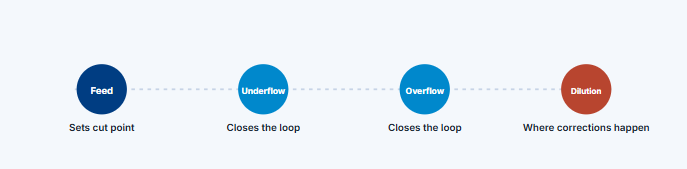
Feed density to the cyclone is the measurement that matters most, because it directly sets the cut point. A single continuous reading upstream of the cyclone, rather than a periodic manual sample, is the minimum viable setup, but it only tells you what's entering the cyclone, not what's happening to the medium once it's inside.
Underflow and overflow density, measured separately, close the loop. Comparing underflow density against feed density tells you whether the medium is behaving the way the cyclone geometry assumes it should; a widening or narrowing gap between the two is often the earliest sign of a problem elsewhere in the circuit, well before it shows up in yield or ash figures.
The dilution water addition point is the fourth place worth instrumenting because that's where most density corrections actually get made manually, in many plants, based on the same feed density reading the operator is trying to correct in the first place.
Why the Number Drifts
Density drift usually comes from multiple causes. A few show up repeatedly.
Dilution water balance is the most common. Excess water enters the circuit through spray systems, washdown, or upstream process water, diluting the medium; the standard response is to add more magnetite to compensate rather than fixing the water balance itself. We've covered this specific failure mode in detail in our post on magnetite consumption benchmarks. Density drift and magnetite consumption often have the same root cause, showing up as two different symptoms.
Magnetite quality also drives density drift, independent of water balance. Off-spec magnetite with the wrong SG and wrong particle size changes how much solids loadinis needed to hold a given medium density, sons an operator correcting density based on a fixed magnetite addition rate is chasing a moving target. We go into the specification numbers that matter here in a separate post on magnetite granulometry.
Instrument drift itself is worth ruling out before assuming the process is at fault. Density meters need periodic calibration checks; a meter reading consistently high or low by a fixed offset looks identical, on a trend chart, to a genuine process drift.
Sensing line blockage or buildup gradually skews readings without an obvious failure event; the meter keeps reporting a number, just not the right one.
None of these causes are mutually exclusive, and on plants that have been running the same instrumentation setup for years without review, it's common to find two of them compounding a water balance issue masked by a meter that's also drifted out of calibration, for instance, with each one making the other harder to diagnose from the trend data alone.
What Drift Actually Costs
The mechanism is straightforward even when the number is specific to your plant. A shift in medium SG moves the cut point, and moving the cut point either sends coal that should have reported to product into the reject stream, a direct yield loss, or lets higher-density, higher-ash material through to product, showing up as a quality penalty on every tonne shipped rather than a single dramatic event.
Because the effect is gradual and distributed across every tonne processed rather than concentrated in an obvious failure, density drift is one of the easier problems to underprice. A 50 kg/m³ drift sustained over a full shift affects every tonne that shift processes, not just a batch.
Density drift is also only half of what determines separation performance; the other half is how sharp that separation is at whatever cut point you're holding, which is a function of the cyclone itself rather than the medium loop. We cover the mechanical side of that in our post on cut point control in heavy media cyclone circuits.
The Payback Arithmetic
Continuous, correctly located density instrumentation is inexpensive relative to what it protects. The comparison is worth running for your own plant: take your current yield or ash variance attributable to density drift, even a rough estimate from your own QC data; value it against your realization price; and compare that monthly figure against the cost of a properly specified density meter at the points that actually matter.
For most plants, the payback period on closing that gap is short, which is part of why this is one of the more straightforward equipment decisions in a coal washery; the case tends to make itself once the numbers are actually run, rather than needing to be argued.
How John Finlay Helps
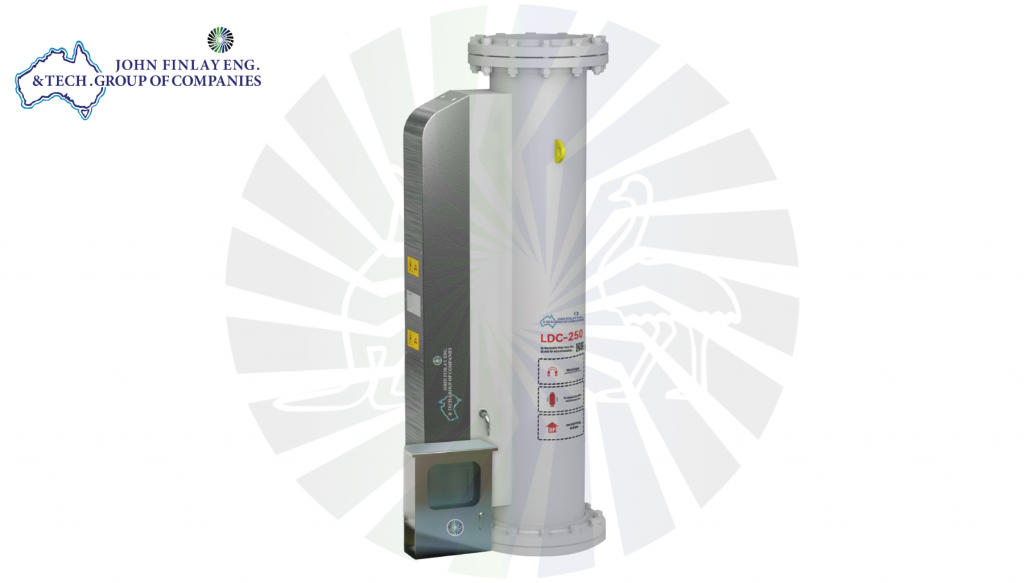
Getting density instrumentation right starts with placing it at the points in the loop that actually drive the cut point, not just wherever's convenient to install. John Finlay's Intelligent Slurry Density Meters are built for exactly this continuous, real-time monitoring feeding directly into the same automation layer as our Dense Media Cyclones and Magnetic Separators. If you're not sure where your circuit's biggest density blind spot is, our engineers can walk your loop with you and point to it directly.