
John Finlay Group Of Companies

Dewatering & Tailings

Everything a coal washery separates has to be dried out and dealt with: the clean coal product and the tailings. Dewatering equipment determines final product moisture, which directly affects transport cost and contract penalties, while tailings handling determines whether a plant needs a tailings pond at all.

John Finlay’s centrifuge range covers both ends of this problem: Middling & Clean Coal Centrifuges bring product moisture down to 5–9%, while Slime Centrifuges (available in horizontal and vertical scraper configurations) handle fine tailings down to under 16% moisture. Both can be fitted with the same Intelligent Early Warning Health Examination System used across the equipment range, catching bearing or vibration issues before they cause downtime.

This category is an area under real pressure across Indian coal washeries right now. Water-scarce sites and tightening environmental norms are pushing operators toward mechanical dewatering and dry stacking instead of wet tailings storage.

This category covers dewatering equipment selection, tailings management approaches, and the move toward zero liquid discharge (ZLD) designs.

Explore further: Filter Press Machines · Centrifuges · Filter Press Brochure

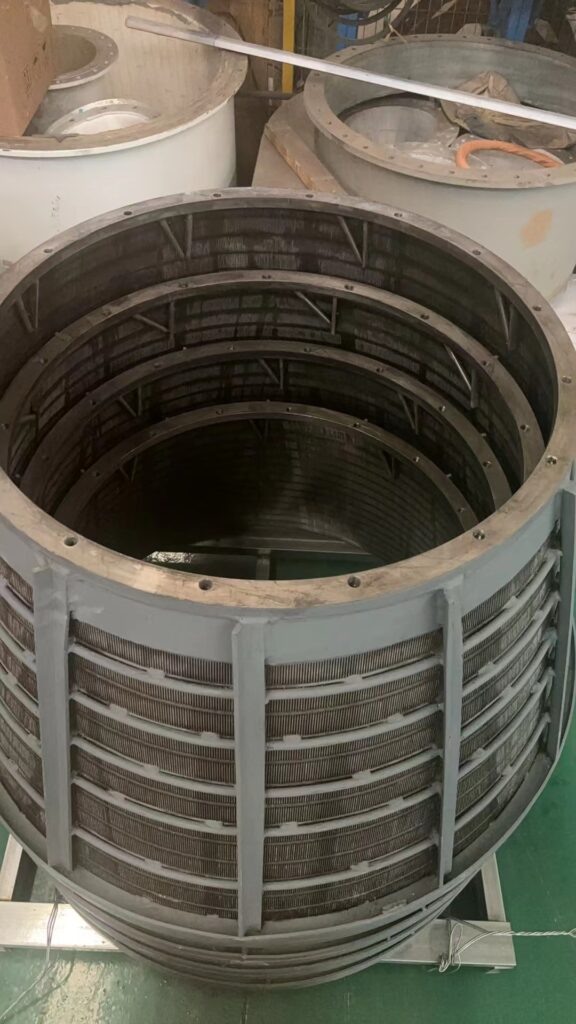
Basket centrifuge screen wedge-wire slot construction, coal dewatering, and John Finlay manufacturing facility.

Product Moisture in Coal Washeries: What Actually Drives It

Product Moisture in Coal Washeries: What Actually Drives It Ash and yield get negotiated in the sale contract. Product moisture gets measured on every truck, every time, with no negotiation involved. It’s the one quality parameter a washery can’t argue about after the fact, which is exactly why it’s worth understanding what actually drives it instead of treating it as whatever the dewatering circuit happens to produce. It’s also the parameter most likely to get misdiagnosed, because a moisture complaint arrives as a single number with no indication of which of several possible causes produced it. Feed characteristics, equipment match, equipment condition, and post-dewatering handling can all move the same figure, and they call for completely different fixes. 22% Feed moisture (avg) 15% Product moisture (avg) 4 Variables that actually drive it 8hr Sustained test run, no drift Feed Characteristics Set the Floor Particle size distribution is the starting point, and it puts a floor under product moisture before any piece of equipment does anything. Finer particles carry proportionally more surface area per tonne, and surface moisture scales with that surface area. A feed with a heavier fines fraction will always retain more moisture than a coarser one, at the same dewatering performance. This phenomenon is why comparing product moisture across two plants running different coal sources without accounting for particle size is close to meaningless. Near-size and ultra-fine material makes this worse specifically because the finest fractions are the hardest for any dewatering technology to release water from. The same fines that create screening and classification challenges elsewhere in the circuit tend to be the fraction driving your moisture number higher than the coarser bulk of the product. Equipment Technology Has to Match the Stream Once feed characteristics are accounted for, the next variable is whether the dewatering technology is actually matched to the stream it’s handling. We’ve covered this in detail separately: a centrifuge fed material finer than it’s sized for loses retention efficiency and passes fines through the screen instead of dewatering them, while a filter press fed a stream that’s too coarse or too dilute cycles inefficiently without necessarily showing up as an obvious fault. The practical implication for product moisture specifically is that a mismatch between technology and stream often looks like a moisture problem when it’s actually a specification problem; the equipment isn’t failing, it was never matched to the material it’s running. Equipment Condition and Setpoints Assuming the technology itself is correctly matched, condition and setpoints are where most of the remaining variation comes from. Basket screen wear on a centrifuge aperture worn open beyond spec reduces retention before the wear is visually obvious, and a machine running below its designed basket speed dewaters worse regardless of how well the basket was originally specified. We go into basket type, capacity and wear life in more depth in our post on centrifuge selection. Deck media condition on upstream screens plays a role too, even though screening and dewatering are usually thought of as separate process steps. A screen that’s blinding or carrying excess near-size material into the dewatering stage is effectively handing the dewatering equipment a harder feed than it was designed around, and no amount of centrifuge or filter press tuning fully compensates for a feed problem created a step earlier in the circuit. What Happens After Dewatering Matters Too This stage is the factor most often left out of a moisture diagnosis entirely. Product moisture measured at the point of dewatering and product moisture measured at the point of dispatch are not always the same number, and the gap between them is usually rehydration rain exposure on an open stockpile, humidity absorption during extended storage, or handling practices that reintroduce surface water after the dewatering equipment already did its job correctly. A plant chasing a moisture complaint at the dewatering stage when the actual cause is stockpile exposure will tune equipment that was never the problem, while the real cause sits untouched in the yard. Checking where in the chain moisture is actually being added at dewatering or after is worth doing before assuming which piece of equipment to investigate. What Real Performance Looks Like We’ve published real test data from a basket centrifuge before: an eight-hour run on combined clean and middling coal held feed moisture at 22% and product moisture at 15%, a consistent 7 to 8 percentage point reduction sustained across the full shift, with no drift as the run continued. That consistency across a full run, not a single favorable reading, is what separates dewatering equipment that’s actually performing from equipment that’s producing a good number under ideal, short-duration conditions. Diagnosing Your Own Moisture Number Start with the distribution of feed particle sizes before assuming an equipment problem, since a shift toward finer feed can raise product moisture with every piece of equipment performing exactly as designed. Confirm the dewatering technology is actually matched to the stream’s particle size and solids concentration, not just installed because it was available. Check the basket screen or filter cloth condition against spec rather than assuming equipment recently in service is automatically performing to its original rating. And separate moisture measured at dewatering from moisture measured at dispatch, because there is a gap between the two points to storage and handling, not the dewatering circuit itself. Work through these in that order rather than starting with whichever machine is easiest to inspect. A centrifuge is usually the first thing checked when moisture drifts, simply because it’s the visible, mechanical piece of the chain. But if the actual cause is a change in the coal source upstream or rain on an open stockpile downstream, time spent tuning the centrifuge is time not spent on the cause that is actually moving the number. How John Finlay Helps Product moisture is rarely one variable acting alone; it’s usually feed characteristics, technology match, and equipment condition compounding together, which is why we look at the whole dewatering circuit rather than a single machine in isolation.

Product Moisture in Coal Washeries: What Actually Drives It Read More »
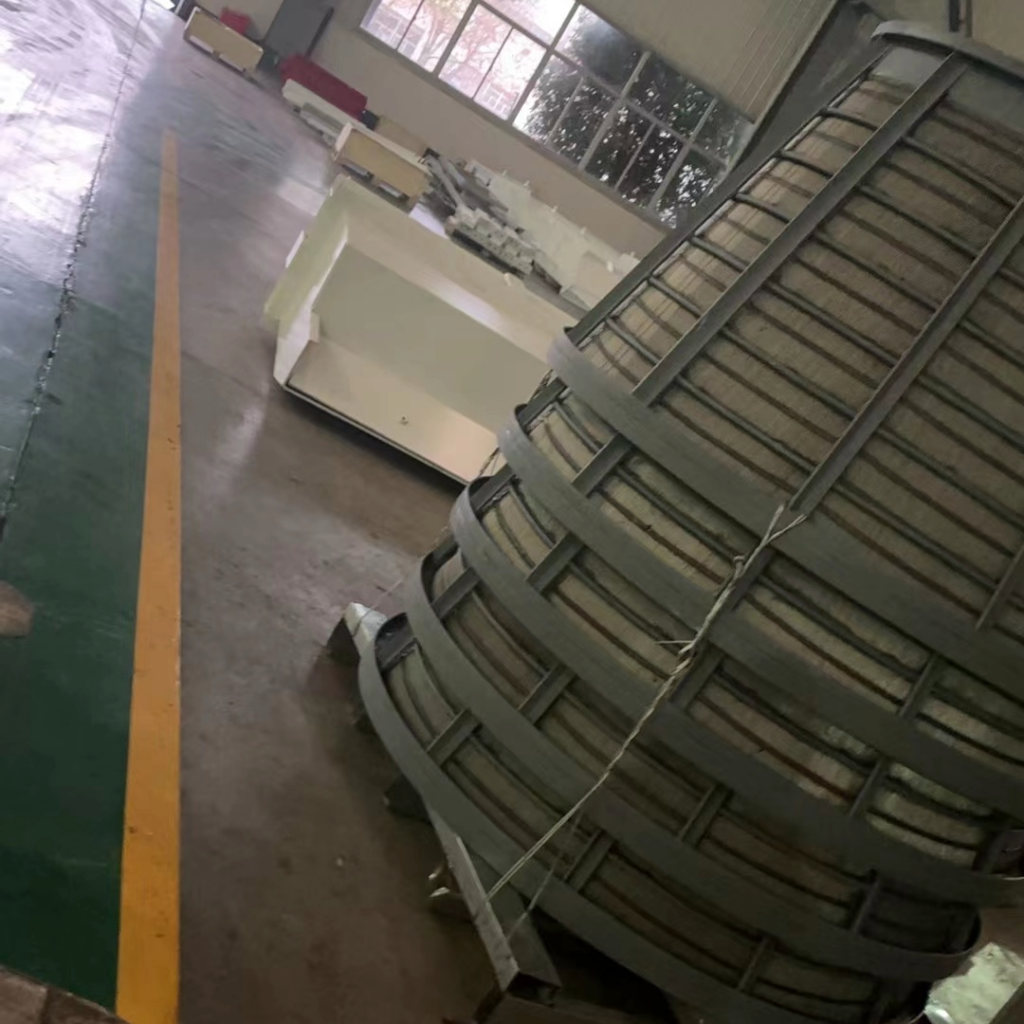
Basket centrifuge screen assembly, coal dewatering, John Finlay manufacturing facility

Centrifuge Selection for Coal Dewatering: Basket Type, Capacity and Wear Life

Centrifuge Selection for Coal Dewatering: Basket Type, Capacity and Wear Life Centrifuge selection on a coal washery spec sheet usually comes down to one line, diameter and model, when it should come down to three: basket type, capacity, and wear life. Get those three right for your actual duty and the rest of the decision mostly makes itself. Screen bowl and basket centrifuges both show up under the same “centrifuge” heading in most equipment lists, but they’re built for different fractions of the plant’s solids. This post is specifically about baskets centrifuges, the standard choice for dewatering the main clean coal product stream, not the screen bowl designs used further into the fines circuit. What Drives a Centrifuge Selection Basket diameter sets the ceiling on throughput, but drive power and basket speed are what determine whether that ceiling is actually usable on your feed. A larger basket spinning below its designed speed dewaters worse than a smaller basket running correctly, because the centrifugal force doing the actual water separation is a function of speed as much as size. John Finlay’s FLL-1500WZ, for example, runs a 75 kW drive and totals 11,754 kg installed weight, numbers that matter less for the spec sheet and more for what they tell you about foundation loading, drive infrastructure, and duty class before the unit ever arrives on site. A centrifuge sized for continuous high-tonnage duty needs a foundation and power supply designed around those figures from the start, not retrofitted after a smaller unit turns out to be undersized. Basket Type and Why It Matters Basket screen construction is where most selection mistakes actually happen, because it’s deceptively simple to spec by diameter and capacity alone and leave screen type as an afterthought. Wedge-wire screen baskets, built from profiled wire with a defined slot aperture, are the standard choice for most coal dewatering duty. The wedge profile is self-cleaning by geometry, narrower on the inside than the outside, which resists blinding better than a plain perforated screen under continuous wet duty. Aperture selection has to match your actual particle size distribution, not a generic default. Too fine an aperture and the basket blinds under load, cutting effective capacity even though the nameplate rating hasn’t changed. Too coarse and fine coal reports to the effluent instead of the product, showing up as a yield loss that gets misdiagnosed as a screening problem elsewhere in the circuit. Basket profile, straight-sided versus tapered, affects how solids convey along the basket during the spin cycle, which in turn affects both residence time and final product moisture. This choice is a duty-specific decision, not a universal preference, and it’s worth specifying against your actual feed characteristics rather than whatever the previous machine on site happened to use. Screen open area is the fourth variable and the one most often overlooked. A higher open-area screen passes water faster for a given basket speed, which sounds like a straightforward win until near-size fines start reporting through it along with the water, the same trade-off that shows up in vibrating screen deck selection, just governed by centrifugal force instead of gravity and vibration. Capacity: What the Numbers Actually Mean Capacity ratings on a centrifuge spec sheet assume a specific feed condition, particle size range, solids concentration, moisture and drift. From that assumption, it is the most common reason an installed centrifuge underperforms its rating without anything actually being broken. Drive power is the practical constraint underneath the capacity number. A 75 kW drive supports a specific combination of basket mass, speed, and load; running feed conditions outside the range for which the power rating was sized result in reduced basket speed under load, degrading dewatering performance before any protection trips. Installed weight matters for reasons beyond the obvious foundation loading question. A machine in the 11,000-12,000 kg class is also telling you something about the mass of the rotating assembly the drive has to bring up to speed and hold there, which affects both starting current requirements and how the machine responds to feed surges. Wear Life: What Actually Wears Basket screen wear is the most visible wear point and the easiest to plan around, since it’s a function of tonnage processed and can be tracked against a replacement schedule. Bearing and seal wear is less visible and more consequential because it develops gradually and often isn’t caught until vibration or noise becomes obvious, well after dewatering performance has already started to drift. What’s worth acting on in the meantime is the diagnostic principle rather than a specific interval: track basket screen condition and bearing vibration as two separate maintenance items with two separate schedules, not a single combined “centrifuge service” line item. A screen nearing replacement and a bearing nearing failure produce different symptoms; screen wear shows up gradually as declining product moisture, and bearing wear shows up as vibration or noise that develops before moisture performance visibly changes. Treating them as one line item on a maintenance log makes it harder to tell which one is actually driving a given performance drop. Real Performance, Not Just a Nameplate Rating We’ve published real test data from an FLL-1500WZ before: an eight-hour run on combined clean and middling coal held feed moisture at 22% and product moisture at 15%, a consistent 7 to 8 percentage point reduction across the full shift. That’s the kind of number worth asking for from any centrifuge you’re evaluating: a sustained result across a full run, not a single favorable reading. Our post on tailings dewatering technology selection goes into how this technology compares against filter presses and belt filter presses for different stream types. How John Finlay Helps Selecting the right basket type, capacity and duty class for your actual feed is exactly where our engineers add the most value, before a centrifuge is ordered, not after it’s underperforming. We supply and commission centrifuges as part of complete dewatering circuits, sized against your real particle size distribution and throughput rather than a generic catalogue spec,

Centrifuge Selection for Coal Dewatering: Basket Type, Capacity and Wear Life Read More »

Basket centrifuge screen assembly, coal dewatering, John Finlay manufacturing facility

Tailings Dewatering: Filter Press, Belt Filter Press or Centrifuge?

Tailings Dewatering: Filter Press, Belt Filter Press or Centrifuge? Product moisture is the number that follows a coal washery out the gate. Ash and yield get negotiated in the contract; moisture gets measured on every single truck, and it’s the one quality parameter where the dewatering circuit, not the washing circuit, does almost all of the work. Three technologies do that job on most Indian coal washeries: filter presses, belt filter presses, and centrifuges. They’re not interchangeable. Each one is built for a different fraction of the plant’s solids, and picking the wrong one for a given stream is a common way to end up with a dewatering circuit that’s technically working and still not hitting spec. Feed moisture (avg) % Product moisture (avg) 0 % Reduction, held over 8hr run 7– 0.03 pt Model tested FLL- 1000 WZ What Each Technology Is Actually For Centrifuges handle coarse and fine coal where speed and continuous operation matter. A basket centrifuge spins the wet coal against a slotted or wedge-wire screen basket, using centrifugal force to drive free water through the screen while the solids are held against the wall. It’s a continuous, high-throughput process, which is why it’s the standard choice for dewatering the main clean coal product stream rather than a batch process sitting in the middle of a continuous plant. Filter presses handle the opposite end of the particle size range fine tailings and slurry that centrifuges can’t dewater efficiently, because very fine particles pass through or blind a centrifuge screen faster than they dewater. A plate and frame filter press forces the slurry through filter cloth under pressure, building a solid cake between the plates before the cycle ends and the cake discharges. It’s a batch process by nature, and it’s the technology that makes zero-discharge tailings handling realistic, because the cake it produces is dry enough to stack or truck rather than pump to a pond. Belt filter presses sit between mechanisms, not necessarily based on particle size. Sludge is conditioned with a flocculant, then carried between two porous belts through a series of rollers that apply progressively increasing pressure, squeezing water out continuously as the belts travel. Unlike a filter press, it never stops to discharge a batch; the cake comes off continuously at the end of the belt run. That makes it suited to sites that need continuous tailings dewatering at moderate throughput without the cycle-time constraints of a batch press. Why the Choice Isn’t Interchangeable The three technologies fail differently when applied to the wrong stream, which is usually the fastest way to tell whether a plant has the right one. A centrifuge fed material that’s too fine loses efficiency fast; the fines migrate through the screen slots instead of being retained, so effluent solid losses climb and the dry product moisture that was supposed to drop stays stubbornly high. This scenario is a common cause of centrifuges getting blamed for a moisture problem that actually started upstream, in whatever’s feeding fines into a stream the centrifuge was never sized for. A filter press fed a stream that’s too coarse or too dilute cycles inefficiently. Coarse particles don’t build a cake the way fine slurry does, and a dilute feed just extends cycle time for the same cake yield, cutting the plant’s effective throughput without anyone changing a setpoint. A belt filter press asked to handle a stream with highly variable solids loading struggles to hold a consistent cake because the roller pressure profile is set for a given feed consistency; a sudden slug of solids either overwhelms the belt or passes through under-conditioned. Matching the technology to the actual particle size and throughput profile of the stream being dewatered, rather than to whatever’s already installed, is what most often separates a dewatering circuit that hits spec from one that is fighting its equipment. What Real Performance Looks Like Numbers from an actual plant are more useful here than manufacturer ranges. On an eight-hour test run of a horizontal vibrating basket centrifuge processing combined clean and middling coal, feed moisture averaged 22% and product moisture averaged 15%; a 7 to 8 percentage point reduction held consistently across the full run, with bearing temperatures and vibration amplitude staying within normal operating range throughout. That’s the kind of result that makes a centrifuge the right call for a clean coal stream: consistent, continuous, and stable over a full shift rather than degrading as the run goes on. That same consistency is the test worth applying to any dewatering technology under consideration. A single reliable reading doesn’t confirm a technology choice. A full shift of stable readings does. Wedge-wire screen basket centrifuge, John Finlay manufacturing facility Getting the Most Out of What’s Already Installed Before assuming a technology swap is the answer to a moisture problem, it’s worth checking whether the installed equipment is actually running at its design point. Centrifuge performance is sensitive to the condition of the basket screen. Slots that have worn open lose their retention efficiency long before the basket looks visibly damaged, and vibration amplitude that’s drifted from its set point changes both throughput and product moisture at the same time. The cycle time of the filter press is sensitive to chemical conditioning upstream; a flocculant dose that’s drifted off its optimum will extend every cycle even if the press itself is mechanically sound. The consistency of the belt press cake depends on roller pressure staying matched to actual feed solids, which changes as upstream circuits change. Most moisture complaints labeled as “we need bigger equipment” actually result from mismatched feed conditions and setpoints, rather than any capacity shortfall. Choosing for Your Actual Stream Start with what’s actually in the stream you’re trying to dewater: the particle size distribution, the solids concentration, and how much those vary from shift to shift. A clean coal product stream with coarse-to-mid particle size and continuous flow points toward a centrifuge. A fine tailings stream that needs to go to dry stack rather than

Tailings Dewatering: Filter Press, Belt Filter Press or Centrifuge? Read More »