
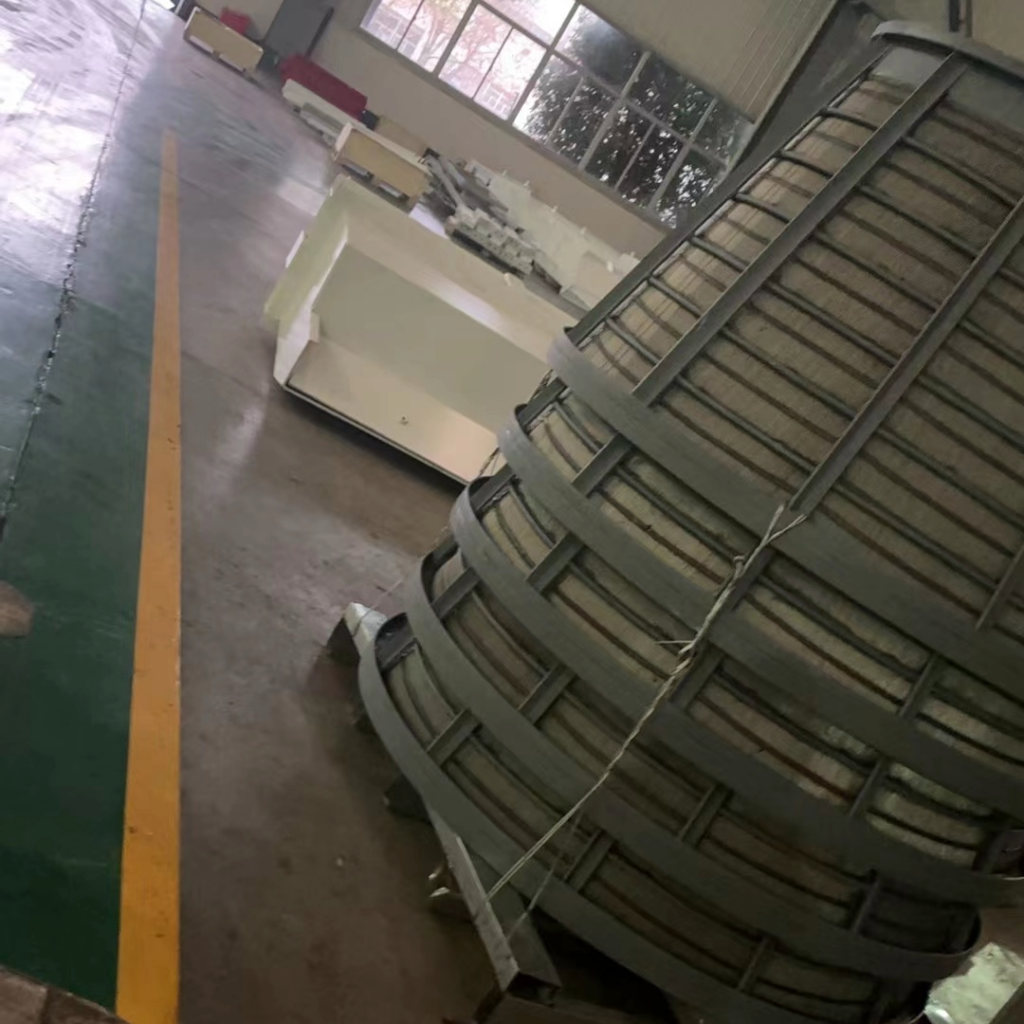
Centrifuge Selection for Coal Dewatering: Basket Type, Capacity and Wear Life
Centrifuge selection on a coal washery spec sheet usually comes down to one line, diameter and model, when it should come down to three: basket type, capacity, and wear life. Get those three right for your actual duty and the rest of the decision mostly makes itself.
Screen bowl and basket centrifuges both show up under the same “centrifuge” heading in most equipment lists, but they’re built for different fractions of the plant’s solids. This post is specifically about baskets centrifuges, the standard choice for dewatering the main clean coal product stream, not the screen bowl designs used further into the fines circuit.
What Drives a Centrifuge Selection
Basket diameter sets the ceiling on throughput, but drive power and basket speed are what determine whether that ceiling is actually usable on your feed. A larger basket spinning below its designed speed dewaters worse than a smaller basket running correctly, because the centrifugal force doing the actual water separation is a function of speed as much as size.
John Finlay’s FLL-1500WZ, for example, runs a 75 kW drive and totals 11,754 kg installed weight, numbers that matter less for the spec sheet and more for what they tell you about foundation loading, drive infrastructure, and duty class before the unit ever arrives on site. A centrifuge sized for continuous high-tonnage duty needs a foundation and power supply designed around those figures from the start, not retrofitted after a smaller unit turns out to be undersized.
Basket Type and Why It Matters
Basket screen construction is where most selection mistakes actually happen, because it’s deceptively simple to spec by diameter and capacity alone and leave screen type as an afterthought.
Wedge-wire screen baskets, built from profiled wire with a defined slot aperture, are the standard choice for most coal dewatering duty. The wedge profile is self-cleaning by geometry, narrower on the inside than the outside, which resists blinding better than a plain perforated screen under continuous wet duty.
Aperture selection has to match your actual particle size distribution, not a generic default. Too fine an aperture and the basket blinds under load, cutting effective capacity even though the nameplate rating hasn’t changed. Too coarse and fine coal reports to the effluent instead of the product, showing up as a yield loss that gets misdiagnosed as a screening problem elsewhere in the circuit.
Basket profile, straight-sided versus tapered, affects how solids convey along the basket during the spin cycle, which in turn affects both residence time and final product moisture. This choice is a duty-specific decision, not a universal preference, and it’s worth specifying against your actual feed characteristics rather than whatever the previous machine on site happened to use.
Screen open area is the fourth variable and the one most often overlooked. A higher open-area screen passes water faster for a given basket speed, which sounds like a straightforward win until near-size fines start reporting through it along with the water, the same trade-off that shows up in vibrating screen deck selection, just governed by centrifugal force instead of gravity and vibration.
Capacity: What the Numbers Actually Mean
Capacity ratings on a centrifuge spec sheet assume a specific feed condition, particle size range, solids concentration, moisture and drift. From that assumption, it is the most common reason an installed centrifuge underperforms its rating without anything actually being broken.
Drive power is the practical constraint underneath the capacity number. A 75 kW drive supports a specific combination of basket mass, speed, and load; running feed conditions outside the range for which the power rating was sized result in reduced basket speed under load, degrading dewatering performance before any protection trips.
Installed weight matters for reasons beyond the obvious foundation loading question. A machine in the 11,000-12,000 kg class is also telling you something about the mass of the rotating assembly the drive has to bring up to speed and hold there, which affects both starting current requirements and how the machine responds to feed surges.
Wear Life: What Actually Wears
Basket screen wear is the most visible wear point and the easiest to plan around, since it’s a function of tonnage processed and can be tracked against a replacement schedule. Bearing and seal wear is less visible and more consequential because it develops gradually and often isn’t caught until vibration or noise becomes obvious, well after dewatering performance has already started to drift.
What’s worth acting on in the meantime is the diagnostic principle rather than a specific interval: track basket screen condition and bearing vibration as two separate maintenance items with two separate schedules, not a single combined “centrifuge service” line item. A screen nearing replacement and a bearing nearing failure produce different symptoms; screen wear shows up gradually as declining product moisture, and bearing wear shows up as vibration or noise that develops before moisture performance visibly changes. Treating them as one line item on a maintenance log makes it harder to tell which one is actually driving a given performance drop.
Real Performance, Not Just a Nameplate Rating
We’ve published real test data from an FLL-1500WZ before: an eight-hour run on combined clean and middling coal held feed moisture at 22% and product moisture at 15%, a consistent 7 to 8 percentage point reduction across the full shift. That’s the kind of number worth asking for from any centrifuge you’re evaluating: a sustained result across a full run, not a single favorable reading. Our post on tailings dewatering technology selection goes into how this technology compares against filter presses and belt filter presses for different stream types.
How John Finlay Helps
Selecting the right basket type, capacity and duty class for your actual feed is exactly where our engineers add the most value, before a centrifuge is ordered, not after it’s underperforming. We supply and commission centrifuges as part of complete dewatering circuits, sized against your real particle size distribution and throughput rather than a generic catalogue spec, and our Vibrating Screens and Exciters are specified to match wherever a centrifuge sits downstream of a screening stage.
Not sure which basket type fits your feed?
Our engineers can size a centrifuge against your actual particle size distribution and throughput.
Talk to an ExpertRelated Equipment
Vibrating Screen
Screens matched upstream of a centrifuge, sized for the same duty.
Tailings Dewatering: Filter Press, Belt Press or Centrifuge?
Read next: how to choose between dewatering technologies for a given stream.