
Instrumenting a Coal Washery: What to Measure First and What Can Wait
Every brownfield washery owner has sat through a pitch that starts with “full SCADA integration” and ends with a number that makes the whole idea feel like a new-build decision, not something you retrofit onto a plant that’s already running. That framing is the actual barrier, more than the cost. Instrumentation isn’t an all-or-nothing capital project; it’s a sequence, and getting the sequence right matters more than getting the whole plant wired up at once.
This post is deliberately not a SCADA pitch. It’s a roadmap for deciding what to instrument first on a plant that’s already operating, already has a maintenance budget, and doesn’t have the appetite for a full-system capital approval process. Every stage in it can be justified, approved, and installed on its own.
Why Sequence Matters More Than Coverage
A plant that instruments everything at once, without a clear view of which measurement actually pays back first, ends up with a lot of data and no discipline about which of it to act on. A plant that starts with the one or two measurements driving the most cost, gets a working result quickly, and expands from a position of proof rather than promise builds the case for the next stage itself. The second approach is also the one that fits a brownfield retrofit budget, because it doesn’t ask for the whole number up front.
What to Measure First: Medium Density
If your circuit runs on dense medium separation, density is the single number most directly tied to the cut point, and it’s usually the cheapest, fastest instrumentation win available. We’ve covered where density should actually be measured in the loop feed, underflow, overflow and the dilution point and the case for starting here is straightforward: a continuous density reading at the points that actually drive the cut point typically pays back within months, not years, because the yield and ash variance it corrects is usually already costing more than the instrumentation itself.
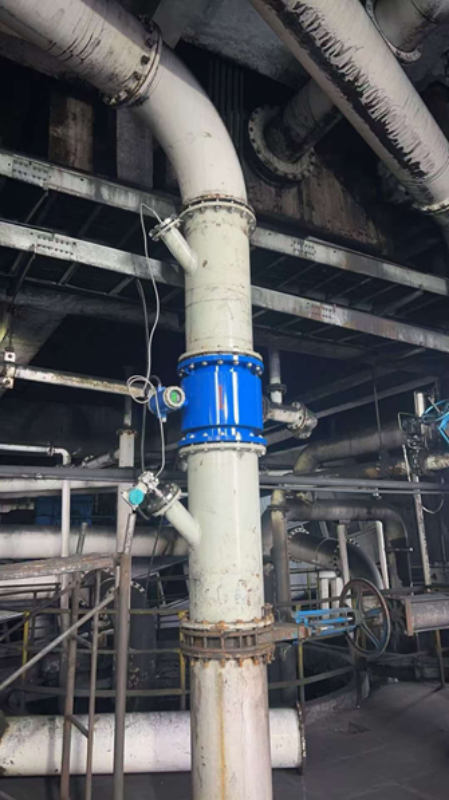
This is also the instrumentation least likely to require touching your existing circuit design. A Slurry Density Meter installs at an existing measurement point without redesigning anything upstream or downstream of it, which matters on a brownfield plant where a circuit redesign is a much harder approval than an instrument retrofit.
It’s worth being specific about what “first” means here, because it’s easy to read the phrase as an instruction to instrument every density point at once. It isn’t. Start with the single point in your loop where density drift has the clearest, most direct line to a yield or ash outcome that you can already quantify from your own QC data. That’s the installation that pays for itself fastest and gives you a real number to justify the next one.
What to Measure Second: Where the Medium Is Actually Going
Once density is instrumented, the next highest-value blind spot is usually magnetite loss, a cost we’ve written about in detail, and one that’s almost always inferred from monthly purchase records rather than measured directly. Real-time medium loss monitoring at the magnetic separator tailings closes that gap specifically, turning a cost you discover a month late into one you can see and act on the same shift.
The reason this issue comes second rather than first is simply that density drift usually has the larger and more immediate cut point impact. Once that’s under control, magnetite loss visibility is what keeps the second-largest cost from staying invisible.
It’s also a natural second step for a practical reason: the same density instrumentation from stage one often sits on the same circuit as the magnetic separator, so the second installation benefits from familiarity your maintenance and operations teams already have with reading and trusting continuous instrumentation, rather than starting the learning curve from zero on unfamiliar equipment.
What to Measure Third: The Asset Costing You the Most Downtime
With density and medium loss instrumented, the next step is condition monitoring but not everywhere at once. The failure modes worth instrumenting are the ones that actually give warning, and the asset worth starting with is whichever one currently causes your longest unplanned stops when it fails. That’s a plant-specific answer, not a generic one; it’s whatever’s already in your downtime records as the recurring problem.
Early warning instrumentation on one correctly chosen asset provides a stronger argument for expanding coverage than instrumenting five assets at once without knowing which one actually needed it most.
What Can Wait
Full plant-wide SCADA integration, flow measurement on every line, and packaged automation across stages that aren’t currently a bottleneck are all things with real value eventually, but they’re not where a brownfield retrofit should start. A stage that isn’t currently causing a measurable problem doesn’t need instrumentation before a stage that demonstrably is, no matter how complete the resulting system would look on a proposal document.
The same logic applies to instruments that measure something already adequately controlled by existing practice. If your plant already has a reliable manual process for something, instrumenting it isn’t worthless, but it’s a lower-priority use of the same budget than closing a blind spot that’s actively costing money right now.
There’s a version of this scenario that’s worth naming directly: instrumenting a stage because it’s visible on a vendor’s product line, rather than because it’s the stage actually costing your plant money, is how a lot of instrumentation budgets get spent on the wrong sequence. The question to keep asking at every stage isn’t “what could we measure here?” it’s “what’s the next-most-expensive blind spot we actually have?”
A Roadmap, Not a Project
Staged this way, instrumenting a coal washery looks less like a single capital decision and more like three separate, smaller ones: density control, medium loss visibility, and condition monitoring on your worst-performing asset. Each stage can justify itself on its numbers before the next one is proposed, which is a fundamentally different conversation than a full SCADA integration pitch asking for approval on projected savings across a system that doesn’t exist yet.
This also means the sequence doesn’t have to run on someone else’s timeline. A plant can sit at stage one for a year while it proves out the density control case, then move to stage two when the budget and the evidence both support it. Brownfield instrumentation done this way is a series of decisions your plant controls, not a project your plant commits to in one signature.
How John Finlay Helps
We built our instrumentation range specifically to support this staged approach rather than force a full-system sale. Our Instrumentation Hub covers nine systems across dense medium control, slurry and thickener management, and process reliability, and every one of them can be specified and installed independently. If you’re not sure which stage your plant should start at, our engineers can walk your circuit with you and point to the single measurement that would pay back fastest, not the whole system, just the first step worth taking.
Not sure which stage your plant should start at?
Our engineers can point to the single measurement that would pay back fastest on your circuit.
Talk to an ExpertRelated Equipment
Density Control in the Media Loop
Where to measure density and why it drifts.
Instrumentation Hub
All 9 packaged systems, grouped by process area.