
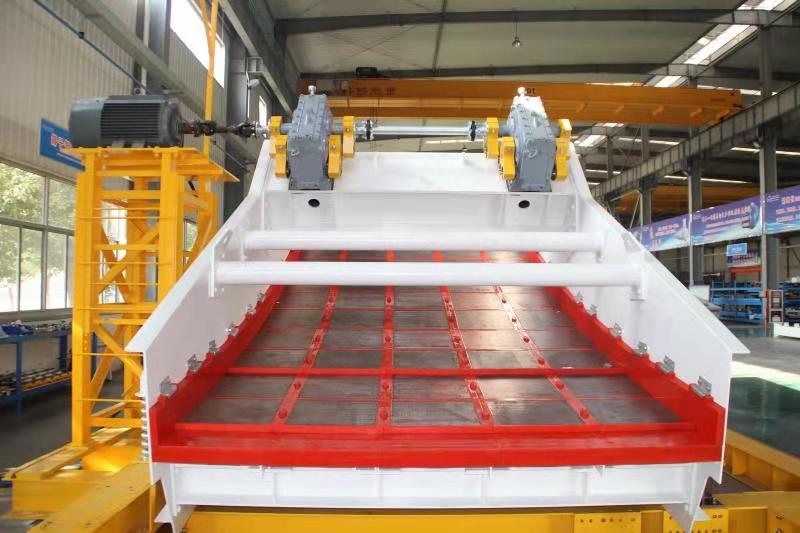
Screen Blinding and Deck Media Selection: Fixing Capacity You Already Paid For
A screen that’s blinded isn’t broken. That’s what makes it expensive: nothing trips, nothing alarms, and nothing gets written up in the shift log. The plant just quietly runs at less than the capacity it was designed and paid for, and because the loss shows up as lower throughput or worse product quality rather than a stoppage, it’s one of the easier problems to live with for months without anyone deciding to fix it.
Blinding occurs when apertures close up, either because near-size particles wedge in or because fine, wet, sticky material coats over them, reducing the open area that is supposed to pass product and causing it to do far less work than it was designed to do. Understanding why it happens on your duty is most of the way to fixing it, and it’s worth the diagnostic time before reaching for the obvious fix, because “install finer or coarser media” without knowing the mechanism is as likely to make the problem worse as better.
Why Screens Blind on Wet Coal Duty
Two separate mechanisms cause blinding, and they call for different fixes.
Pegging happens when particles close to the aperture size, usually somewhere between half and just under the full aperture dimension, wedge into the opening instead of passing through or staying on top. Round or square apertures are more prone to pegging than slotted ones because a near-size particle has more ways to jam itself into a symmetric hole. High near-gravity material content, common in Indian coking coals, worsens the situation simply because there’s more material sitting right at the size cut where pegging happens.
Blinding properly is different; it’s fine, wet material sticking to the screen surface itself, usually because of surface tension in high-moisture, high-clay-content feed. The issue is less about particle size and more about surface chemistry and moisture: sticky fines coat the deck and reduce the effective open area, and the coating itself can trap more fines behind it.
Both mechanisms get worse at low vibration amplitude and low stroke because the screen isn’t providing enough motion to shake near-size material loose or shed sticky fines before they set. They’re also both worse when the aperture is sized too close to the actual particle size distribution of the feed, leaving little margin between what’s designed to pass and what’s designed to catch.
Deck Media, and Where Each One Earns Its Cost
Wire mesh has the highest open area for a given aperture and the lowest capital cost, which is why it’s still common on scalping and coarse duty. Its weakness is wear life and blinding resistance on wet, sticky, near-size-heavy feed; the wires themselves wear at contact points, apertures deform out of spec well before the mesh looks visibly worn out, and it has no self-cleaning geometry to help shed pegged particles.
Polyurethane modular panels trade some open area for wear life and blinding resistance. The molded aperture geometry can include relief angles that widen slightly on the underside, which lets wedged particles push through rather than lodge permanently, and the panel’s flex under vibration helps shed sticky fines that would otherwise cake onto a rigid deck. Wear life is typically several times that of wire mesh in equivalent duty, which is what justifies the higher unit cost on decks that see heavy near-size loading usually drains and rinses decks in a dense medium circuit, where both pegging and blinding risks are highest.
Rubber panels sit between the two in cost and open area, with strong resistance to impact wear, making them a common choice for scalping decks under heavier lump feed where impact damage matters more than fine blinding. They’re generally not the first choice for fine wet screening duty, where polyurethane’s blinding resistance usually wins out.
Deck media comparison by duty
Deck Media | Open Area | Wear Life | Blinding Resistance | Best Duty |
|---|---|---|---|---|
Wire Mesh | Highest | Shortest | Low: no self-cleaning geometry | Scalping / coarse, low near-size |
Polyurethane | Moderate | Longest (several× wire) | High: relief-angle apertures flex & shed fines | Drain & rinse, high near-size / wet fines |
Rubber | Moderate | Long (impact duty) | Moderate | Scalping under heavier lump feed |
Matching Media to the Deck, Not the Whole Screen
The most common mistake we see is choosing one type of deck media for an entire multi-deck screen based on the toughest duty, even though different decks on the same machine usually face different problems. A top deck scalping oversize lump doesn’t carry the same blinding risk as a bottom drain-and-rinse deck handling fine, wet, near-size material; specifying polyurethane across the whole machine because the bottom deck needs it usually means paying for wear resistance the top deck doesn’t need, while specifying wire across the whole machine because the top deck is fine with it usually leaves the bottom deck blinding within months.
Banana screens complicate this further because the changing deck angle along the machine’s length is itself doing separation work, which means the media decision on each section needs to account for both the local duty and the local angle, not just the overall feed.
What to Check Before Assuming You Need New Media
Before resizing apertures or switching deck media, rule out the cheaper causes first. Confirm the screen is actually running at its designed stroke and frequency. Motor or exciter wear reduces amplitude gradually, and a screen running under-amplitude will become blind faster on media that would otherwise be adequate for the duty. Check the spray water coverage and pressure on rinse decks, as inadequate rinsing is often the real cause of fines sticking, which can be misdiagnosed as a media problem. Also, confirm that the feed’s actual particle size distribution matches the design basis. Plants change coal sources over time, and a deck specified for one washability profile can start blinding simply because the near-size fraction in the feed has grown since the screen was last selected.
Getting the mechanical basics right first means whatever media change you make afterward is solving the actual problem, not compensating for a machine that isn’t running the way it was designed to.
The Capacity Was Already Paid For
That’s really the point worth sitting with. A blinded screen isn’t a screen that needs replacing; in most cases, it’s a screen running below the capacity the plant has already invested in, for reasons that are diagnosable and fixable without a capital project. Working through mechanism, media and mechanical basics in that order usually recovers most of the lost capacity before anyone needs to sign off on new equipment.
It’s also worth revisiting the diagnosis periodically rather than treating a media change as a permanent fix. Feed characteristics drift as coal sources change, exciters wear down gradually the same way any rotating equipment does, and a deck that was correctly specified two years ago can quietly fall out of spec for the duty it’s actually seeing today.
How John Finlay Helps
John Finlay’s screening engineers add the most value by specifying the right deck media for your actual near-size distribution, rather than just focusing on the toughest duty of the machine. We supply Vibrating Screens and Exciters matched to your washability profile, and in cases where it’s a screen running below the capacity the plant has, we can review your feed’s particle size distribution to recommend media deck by deck. If capacity has been drifting, we can help confirm whether it’s a media problem or a mechanical one first.
Not sure which media fits your duty?
Our engineers can review your near-size distribution and recommend the right deck media.
Talk to an ExpertRelated Equipment
Exciters
Vibration source sizing and maintenance for consistent screen amplitude and stroke.
Dense Media Cyclone
Two Product & Three Product HMC series engineered for optimal EP values.