
What Each Technology Is Actually For
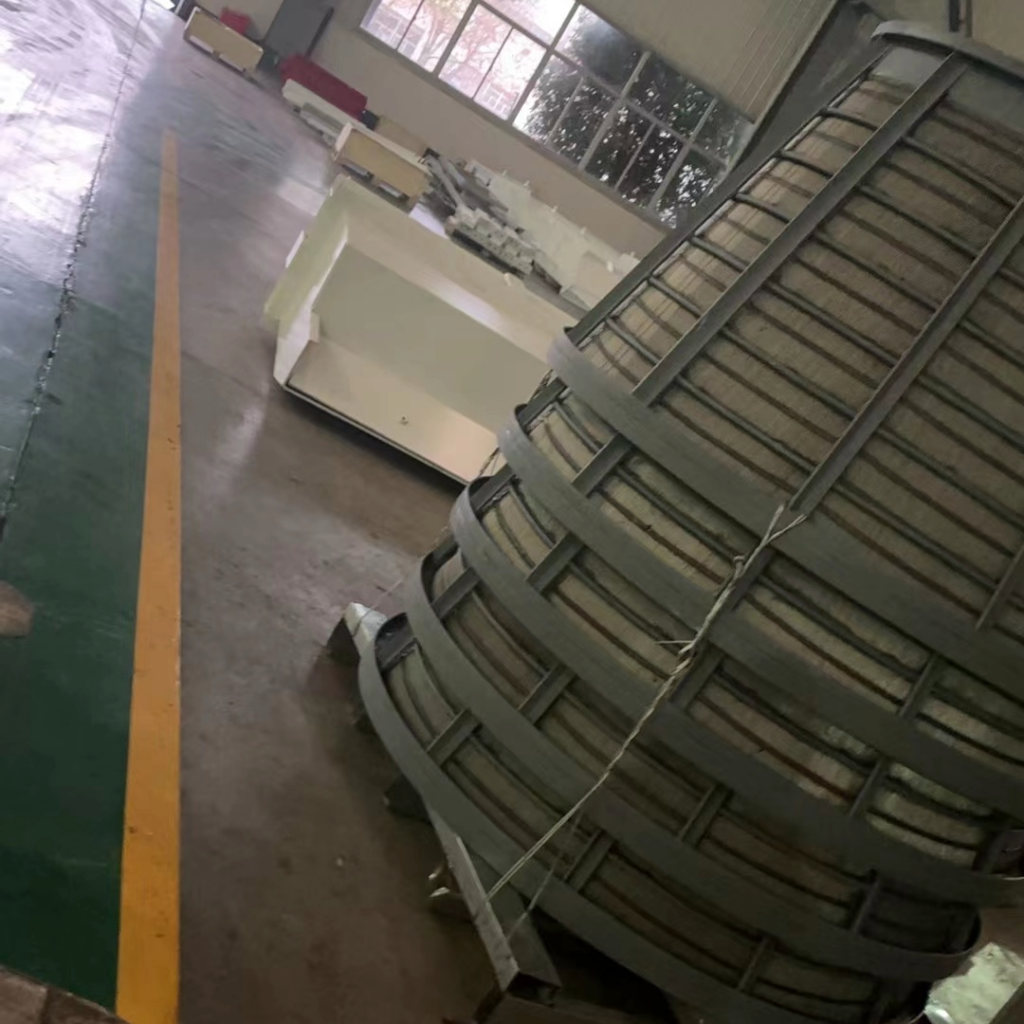
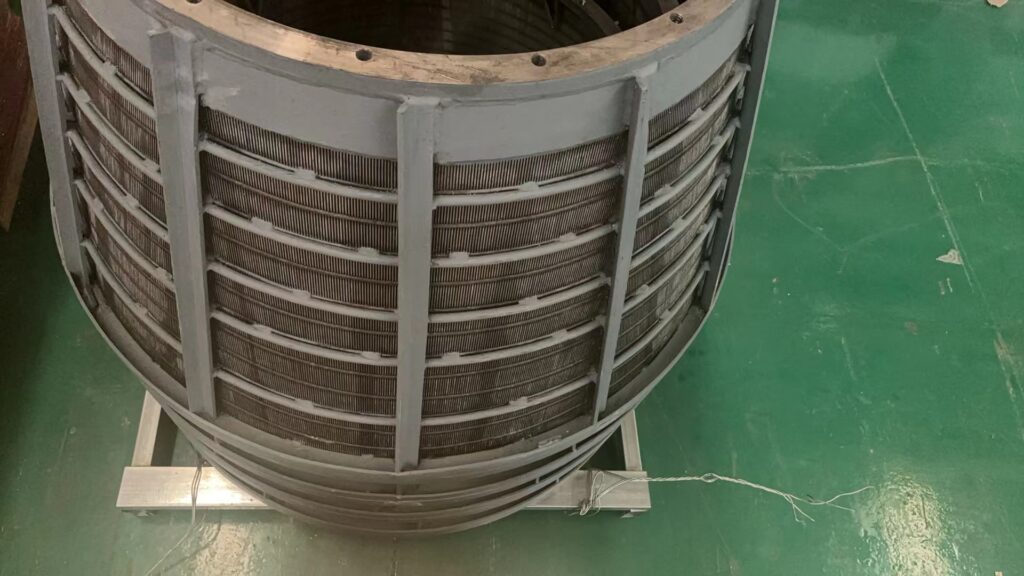
Centrifuges handle coarse and fine coal where speed and continuous operation matter. A basket centrifuge spins the wet coal against a slotted or wedge-wire screen basket, using centrifugal force to drive free water through the screen while the solids are held against the wall. It's a continuous, high-throughput process, which is why it's the standard choice for dewatering the main clean coal product stream rather than a batch process sitting in the middle of a continuous plant.
Filter presses handle the opposite end of the particle size range fine tailings and slurry that centrifuges can't dewater efficiently, because very fine particles pass through or blind a centrifuge screen faster than they dewater. A plate and frame filter press forces the slurry through filter cloth under pressure, building a solid cake between the plates before the cycle ends and the cake discharges. It's a batch process by nature, and it's the technology that makes zero-discharge tailings handling realistic, because the cake it produces is dry enough to stack or truck rather than pump to a pond.
Belt filter presses sit between mechanisms, not necessarily based on particle size. Sludge is conditioned with a flocculant, then carried between two porous belts through a series of rollers that apply progressively increasing pressure, squeezing water out continuously as the belts travel. Unlike a filter press, it never stops to discharge a batch; the cake comes off continuously at the end of the belt run. That makes it suited to sites that need continuous tailings dewatering at moderate throughput without the cycle-time constraints of a batch press.
Why the Choice Isn't Interchangeable
The three technologies fail differently when applied to the wrong stream, which is usually the fastest way to tell whether a plant has the right one.
A centrifuge fed material that's too fine loses efficiency fast; the fines migrate through the screen slots instead of being retained, so effluent solid losses climb and the dry product moisture that was supposed to drop stays stubbornly high. This scenario is a common cause of centrifuges getting blamed for a moisture problem that actually started upstream, in whatever's feeding fines into a stream the centrifuge was never sized for.
A filter press fed a stream that's too coarse or too dilute cycles inefficiently. Coarse particles don't build a cake the way fine slurry does, and a dilute feed just extends cycle time for the same cake yield, cutting the plant's effective throughput without anyone changing a setpoint.
A belt filter press asked to handle a stream with highly variable solids loading struggles to hold a consistent cake because the roller pressure profile is set for a given feed consistency; a sudden slug of solids either overwhelms the belt or passes through under-conditioned.
Matching the technology to the actual particle size and throughput profile of the stream being dewatered, rather than to whatever's already installed, is what most often separates a dewatering circuit that hits spec from one that is fighting its equipment.
What Real Performance Looks Like
Numbers from an actual plant are more useful here than manufacturer ranges. On an eight-hour test run of a horizontal vibrating basket centrifuge processing combined clean and middling coal, feed moisture averaged 22% and product moisture averaged 15%; a 7 to 8 percentage point reduction held consistently across the full run, with bearing temperatures and vibration amplitude staying within normal operating range throughout. That's the kind of result that makes a centrifuge the right call for a clean coal stream: consistent, continuous, and stable over a full shift rather than degrading as the run goes on.
That same consistency is the test worth applying to any dewatering technology under consideration. A single reliable reading doesn't confirm a technology choice. A full shift of stable readings does.
Getting the Most Out of What's Already Installed
Before assuming a technology swap is the answer to a moisture problem, it's worth checking whether the installed equipment is actually running at its design point. Centrifuge performance is sensitive to the condition of the basket screen. Slots that have worn open lose their retention efficiency long before the basket looks visibly damaged, and vibration amplitude that's drifted from its set point changes both throughput and product moisture at the same time. The cycle time of the filter press is sensitive to chemical conditioning upstream; a flocculant dose that's drifted off its optimum will extend every cycle even if the press itself is mechanically sound. The consistency of the belt press cake depends on roller pressure staying matched to actual feed solids, which changes as upstream circuits change.
Most moisture complaints labeled as "we need bigger equipment" actually result from mismatched feed conditions and setpoints, rather than any capacity shortfall.
Choosing for Your Actual Stream
Start with what's actually in the stream you're trying to dewater: the particle size distribution, the solids concentration, and how much those vary from shift to shift. A clean coal product stream with coarse-to-mid particle size and continuous flow points toward a centrifuge. A fine tailings stream that needs to go to dry stack rather than a pond points toward a filter press. A moderate-throughput sludge stream that needs continuous rather than batch handling points toward a belt filter press. Getting that match right the first time avoids the more expensive conversation later, when the equipment that's already bolted to the floor turns out to be the wrong shape for the job.
How John Finlay Helps
Matching the right dewatering technology to your actual stream is exactly the kind of decision John Finlay's engineers help with before equipment gets specified, not after. We supply and commission centrifuges, filter presses, and belt filter presses as part of complete dewatering circuits, and the field data in this post comes from plants we've commissioned ourselves. If your current setup is fighting its own equipment, we can help diagnose whether it's a technology mismatch or a setpoint drift.