First Commercial Molybdenum Ore Sorting Application – Yulong Mine
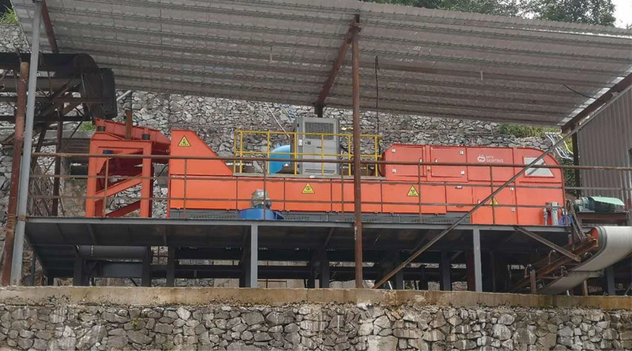
Guangxi Hezhou Yulong Mining Industry Co., Ltd. operates the Yulong molybdenum operation, processing a +10–60mm ore fraction with a raw grade of 0.175% molybdenum. This installation holds a particular distinction: it was the first commercial application of molybdenum ore sorting, giving the technology its first field validation on this ore type ahead of wider deployment elsewhere. John Finlay delivered this installation, using sensor-based ore sorters to reject barren rock from the +10–60mm feed and lift ore grade before further processing.
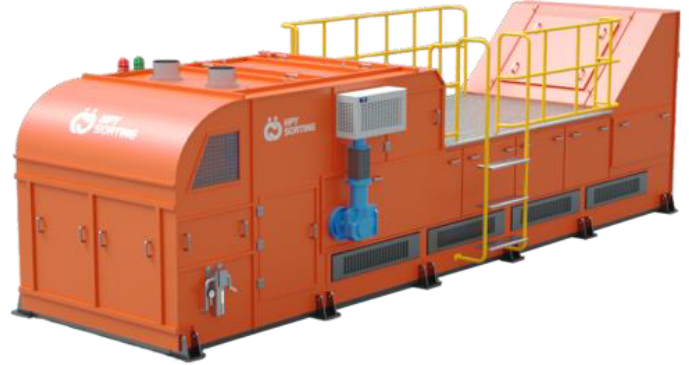
Sensor-based ore sorters were installed to pre-concentrate the +10–60mm fraction at Yulong, rejecting more than three-quarters of feed as barren rock while lifting ore grade more than fourfold ahead of further processing.
Equipment and Performance
1. Sensor-Based Pre-Concentration
● Machines Used: Sensor-based ore sorters
● Feed Particle Size: +10–60mm
● Function: Removes low-grade waste rock from +10–60mm feed ahead of downstream processing
Sorting Results
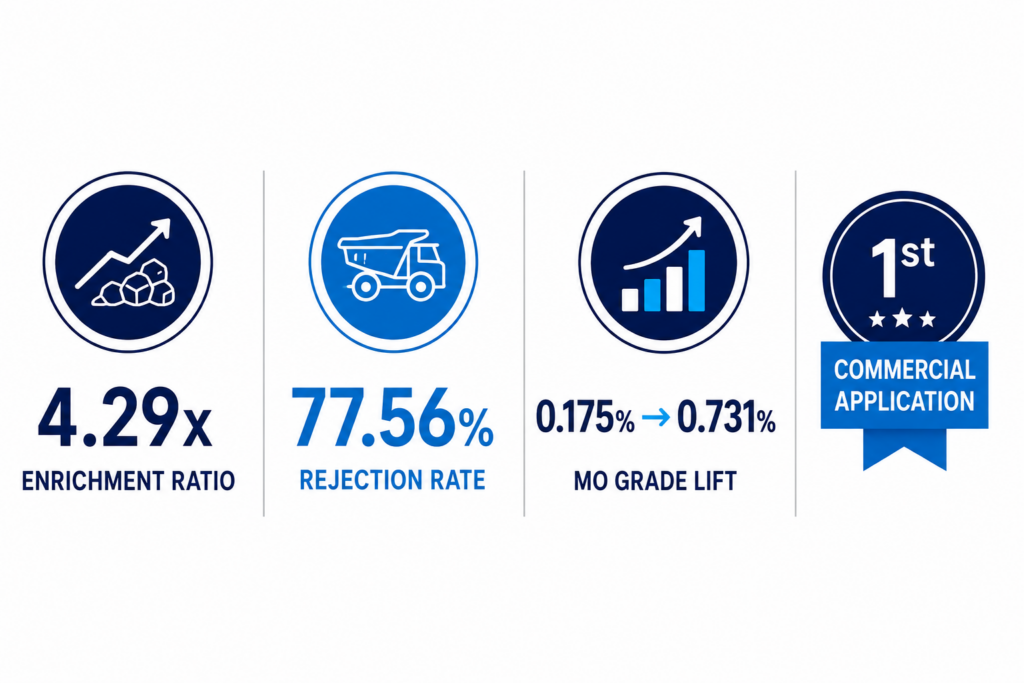
● Raw Ore Grade: 0.175% Mo
● Concentrate Grade: 0.731% Mo
● Waste Rock Grade: 0.015% Mo
● Rejection Rate: ≥77.56%
● Enrichment Ratio: 4.29Benefits and Outcomes
● Economic Efficiency: Rejecting 77.56% of feed while lifting concentrate grade from 0.175% to 0.731% Mo, a 4.29x enrichment, means the plant processes a smaller, far richer stream through grinding and flotation, cutting costs per unit of recovered molybdenum.
● Environmental Impact: Removing more than three-quarters of run-of-mine tonnage before it reaches the plant reduces the volume of material moving into tailings storage.
● Operational Efficiency: As the first commercial application of molybdenum ore sorting, Yulong’s results gave the technology a proven track record for wider deployment across molybdenum operations since.
Conclusion
Yulong holds a distinct place in John Finlay's molybdenum sorting history as the first commercial deployment of the technology. Even as the debut application, it delivered a 4.29x enrichment ratio while rejecting 77.56% of run-of-mine feed results that helped establish sensor-based sorting as a viable pre-concentration method for molybdenum ore ahead of wider rollout.